Last updated November 23, 2026
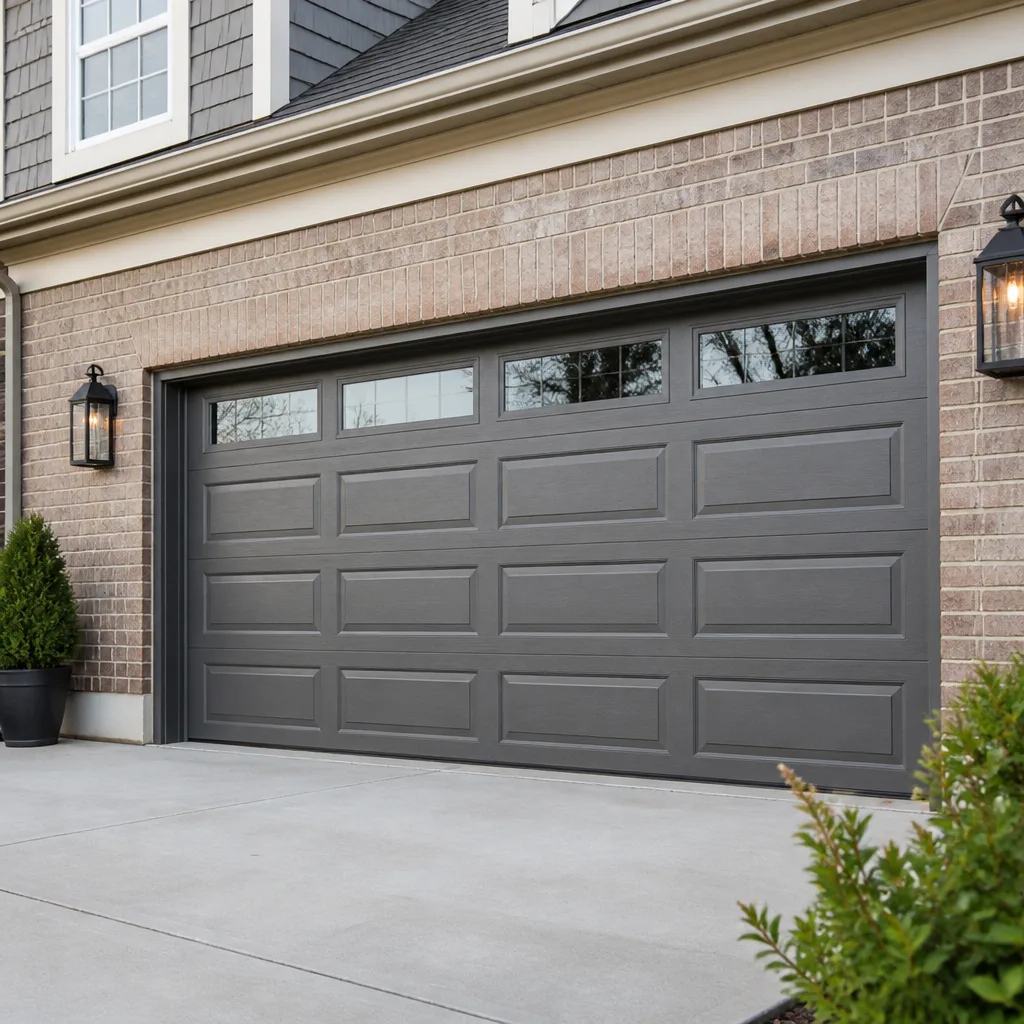 Raised-panel steel
 Carriage house
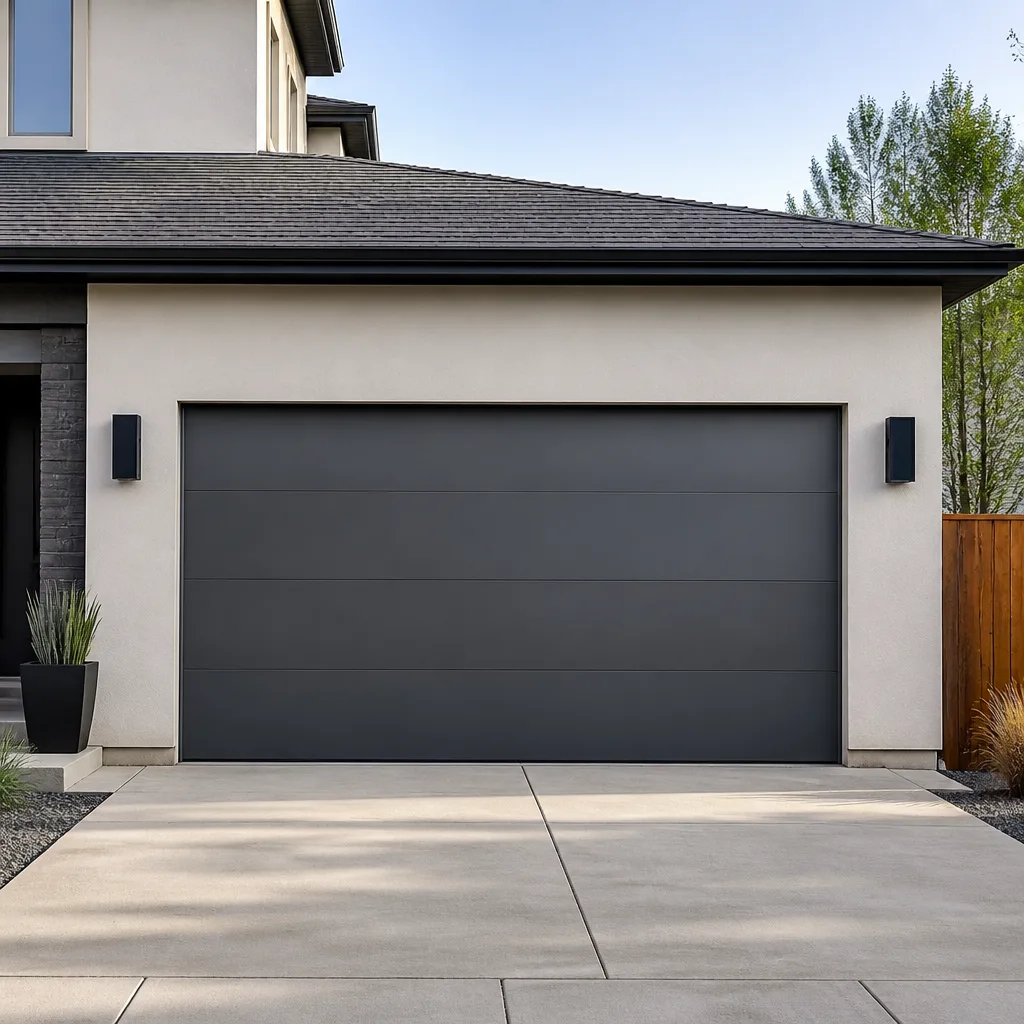 Modern flush
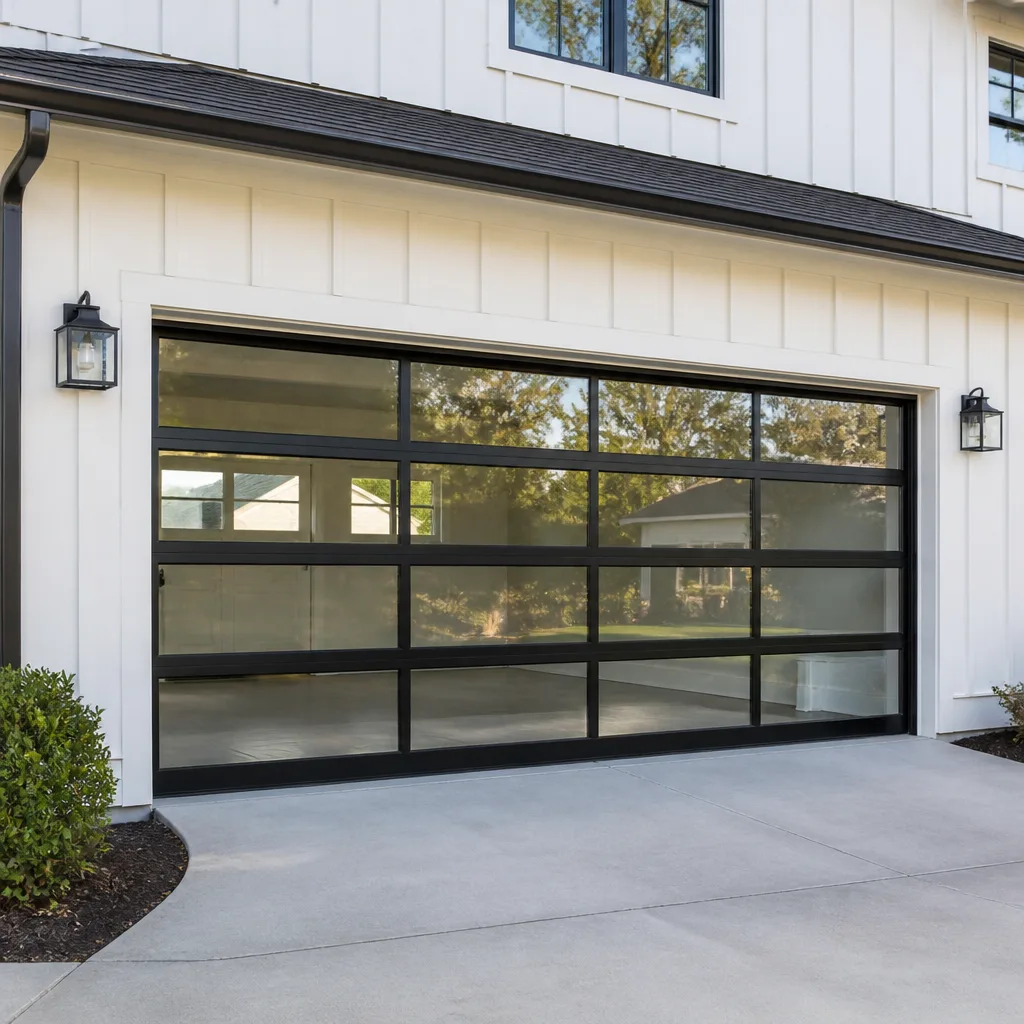 Full-view glass
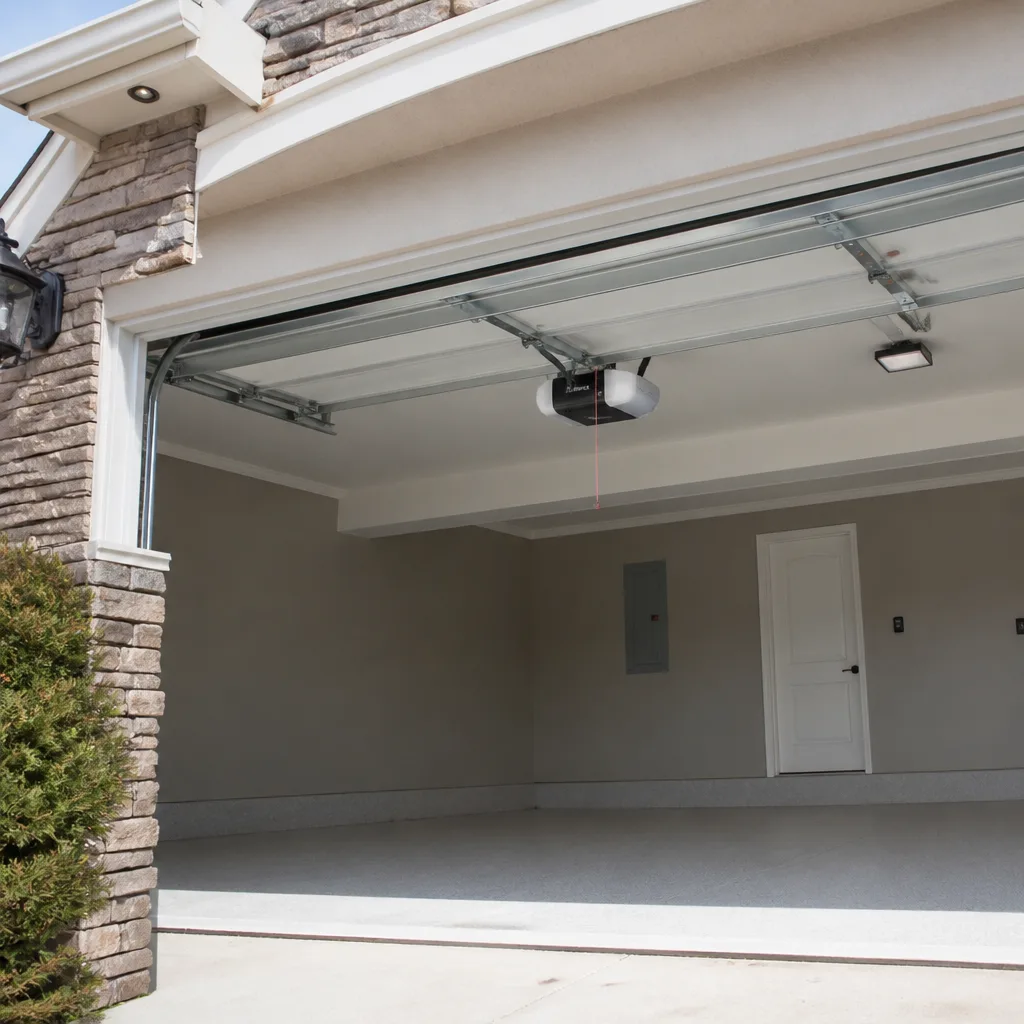 LiftMaster openers
 Chamberlain openers
Full 25-point door and opener safety check with every visit - springs, cables, rollers, tracks, and your LiftMaster or Chamberlain opener included
You get a price before we start. It does not change when the pro arrives.
Get your free estimateSeasonal Garage Door Care for SeaTac: Year-Round Homeowner’s Guide
Most garage door maintenance advice you’ll find online assumes four seasons: a spring tune-up, a summer check, a fall clear-out, a winter rest. SeaTac doesn’t work that way. Here, the calendar really has two modes – a long wet stretch that runs from October into April, and a short, dry summer – with two sharp transition windows that decide how the rest of your year goes. Miss October and you spend the wet months chasing rust and water damage. Miss April and you find out in June that something seized while it sat. This guide rewrites garage door care around SeaTac’s actual weather calendar, so you’re working with the climate instead of against it.
Quick Answer
In SeaTac, garage door care follows a wet-season/dry-season rhythm rather than the classic four-season model. The two dates that matter most are October, when you prep for six months of rain, and April, when you inspect for what that rain left behind. Everything else – lubrication, seal checks, balance tests, opener calibration – fits around those two transition points, which is where the majority of annual service calls cluster.
Styles & brands we work with
- Raised-panel steel
- Carriage house
- Modern flush
- Full-view glass
- LiftMaster openers
- Chamberlain openers
Table of Contents
- Why SeaTac’s Seasons Break the Standard Maintenance Model
- October Prep: Tasks Before the First Sustained Rain, Ranked by Urgency
- Mid-Winter Check: What Two Months of Moisture Does
- April Transition: Why Spring Failures Spike in the Pacific Northwest
- Summer Dry-Season Tasks: What Cracks and Dries Out
- Year-Round Opener Sensitivity: Temperature Swing and Auto-Reverse Calibration
- Common Mistakes to Avoid
- When to Call a Professional
Why SeaTac’s Seasons Break the Standard Maintenance Model
SeaTac averages around 38 inches of rain a year, and almost all of it lands between October and April. That’s the fact that should reshape how you think about your garage door. It isn’t a “wet climate” in the vague sense – it’s a climate with a six-month wet half and a dry half, and the door spends each half doing very different things.
During the wet months, moisture doesn’t attack your door evenly. It works in a sequence. First the bottom seal, sitting closest to the wet concrete slab and the splash zone at the apron. Then the rollers and hinges, which collect condensation and lose lubrication faster than most homeowners expect. Then the cable cores, where water wicks in at the drum and the bottom bracket. Wood tracks – less common now but still out there on older homes around SeaTac – swell and bind. Steel tracks don’t swell, but they do collect grit that turns into a grinding paste once it’s wet. By the time the rain stops in April, the door has been through six months of that, and the dry months are when the damage surfaces.
The upshot: seasonal maintenance here isn’t about four evenly spaced check-ins. It’s about two hard deadlines. Get ahead of the rain in October, and inspect the aftermath in April. In our experience, those two windows are where most of the year’s preventable problems either get caught or get missed.
If you’ve never had your door looked at by someone who knows what wet-season wear looks like, a professional garage door repair visit in early fall is the highest-value appointment on the calendar.
October Prep: Tasks Before the First Sustained Rain, Ranked by Urgency
October is the single most important month for garage door care in SeaTac. The goal is simple: finish the jobs that keep water and grit out before the rain settles in for six months. Here’s the order that matters, ranked by how much damage a missed task causes.
- Bottom seal, first and always. The bottom seal is your door’s only real barrier against standing water at the slab and wind-driven rain at the apron. Run a hand along it and look for cracks, flattening, or gaps where it meets the floor. A seal that’s already stiff or torn will let water under the door all winter. Replacing a bottom seal is a straightforward, inexpensive job – doing it in October saves you the rust and rot that follow a missed one.
- Weatherstripping around the frame. Check the perimeter stops and the header seal at the top. Gaps here let in water that runs down the inside of the door and into the opener rail. Re-nail or replace loose sections before the rain.
- Lubricate rollers, hinges, and the torsion shaft. Use a proper garage door lubricant, not WD-40-style spray, on hinges, rollers, and bearing plates. This is your one job that buys the most wet-season protection for the least effort – a well-lubricated door sheds water and resists the grit that causes binding.
- Clear the tracks and check for rust. Wipe out grit and inspect for rust spots, especially on steel tracks near the floor where water pools. Light surface rust can be cleaned and treated now; deep pitting means the track should be replaced.
- Test the balance. Disconnect the opener and lift the door halfway by hand. It should stay put. If it drops or rises on its own, the springs are out of balance and will strain the opener all winter.
- Look at the cables. Check for fraying, kinks, or rust at the drum and bottom bracket. Frayed cables are a safety issue, not a maintenance item – stop using the door and call a professional.
- Test the auto-reverse and photo-eye. Put a piece of wood on the floor in the door’s path and confirm the door reverses on contact. Break the photo-eye beam and confirm the door reverses. Do this once in October and once in April.
Do these seven in order and you’ve handled the October transition. What you don’t want to do is leave the seal and weatherstripping until you notice water on the garage floor in December, because by then the damage has a two-month head start.
Mid-Winter Check: What Two Months of Moisture Does
By January, your door has been wet for roughly three months straight. This is the point where the wear from October-onward starts to show, and a quick mid-winter inspection in SeaTac keeps small problems from becoming April emergencies. You’re not doing a full tune-up here – just looking at the parts moisture attacks first.
Start at the bottom seal. After months of contact with wet concrete and temperature cycling, the seal hardens and can separate from the bottom section. Look for a visible gap when you shine a light under the door from inside, or water tracking in at the apron after a storm. A bottom seal that’s doing its job stays soft and continuous; one that’s failing will crack when you flex it.
Then the rollers. Rollers are where moisture and grit meet lubrication, and the result is a door that gets progressively harder to move. Listen for squealing, grinding, or a door that seems to hesitate at the start of travel. A roller that’s seized or flat-spotted adds strain to the opener and the springs every time the door cycles. On a wet-season door, rollers are one of the highest-wear parts, and it’s worth checking them specifically rather than waiting for a noise complaint.
Hinges and the torsion shaft bearings are next. Condensation collects in the hinge knuckles and bearing plates, and if the lubrication from October has washed or worn away, metal starts meeting metal. A few drops of proper lubricant mid-winter is cheap insurance.
Finally, look at the cable cores. Water wicks into the strands and starts corrosion from the inside, which you can’t see until the cable frays. Check the visible strands at the drum for rust staining or broken wires. If you see either, stop using the door and call a professional – cables are high-tension parts and not a homeowner repair.
If your door is a Wayne Dalton or an Amarr model with a manufacturer-specific bottom seal profile, matching the right replacement seal matters more than most people realize. We work on those systems – parts, programming, and all – so a mid-winter seal swap doesn’t turn into a weeks-long search for the right profile.
April Transition: Why Spring Failures Spike in the Pacific Northwest
April is when the season changes, and it’s also when spring failures spike in the Pacific Northwest. The connection is real: after six months of moisture, temperature cycling, and near-constant operation, the springs on your door have absorbed a huge amount of stress. The wet season is the long build-up. The dry season is when the accumulated fatigue shows up as a snapped spring.
Springs are metal under constant tension, and they don’t fail on a clean curve – they wear with every cycle and every temperature change, and a spring that’s been near its limit for months tends to give out once the load pattern shifts. In SeaTac, the April shift is that load pattern changing. Doors that cycled heavily all winter suddenly see drier air, different temperature ranges, and continued daily use. That’s the combination where the majority of annual garage door spring repair calls happen. So while the rest of the country does a light “spring cleaning,” April in SeaTac is the month to actually inspect the springs and the hardware attached to them.
Here’s what to check, and what to leave alone:
- Look at the springs, don’t touch them. Torsion springs across the top of the door and extension springs above the tracks are under extreme tension. A hairline crack or a visible gap in the coils on a torsion spring is a sign it’s failing. Call a professional and stop using the door.
- Listen. A loud bang from the garage, a door that suddenly feels heavy, or an opener that struggles to lift it all point to spring trouble. A spring failure is a hard stop, not a “use it gently until it’s fixed” situation.
- Check the balance again. Disconnect the opener and lift halfway. A door that won’t hold is telling you the springs are out of balance or failing.
- Inspect the bottom brackets and drums. These are the anchor points for the cables, and after a wet winter they’re where corrosion shows. Don’t loosen anything here – the cables carry spring tension too.
- Book a professional inspection. Spring work is dangerous – the highest-tension job in the whole system, and manufacturers and safety organizations warn against doing it yourself. This is the one April task where an expert visit is the correct move, not a DIY shortcut.
One more April note: this is also the month to replace any weatherstripping that didn’t survive the winter. Putting fresh seals on in April means the dry months finish the drying-out process properly, and the next October starts from a clean baseline.
Summer Dry-Season Tasks: What Cracks and Dries Out
SeaTac’s dry season is short, and that’s exactly why it fools people. Summer here isn’t the maintenance dead zone it looks like – it’s the window when everything the wet season saturated finishes drying out, and a few specific materials don’t handle the swing well. The job in summer is mostly inspection, plus a couple of adjustments that are easier to make now than in October.
Start with anything made of wood or a wood composite. Wood tracks on older doors can swell in the wet months and then shrink and crack as they dry. If you’ve got wood jambs, stops, or a wood bottom section, summer is when you want to catch cracking, separation, or loosened fasteners before fall. Paint and sealant on wood parts do their real work in the dry months, so touching up now protects through the next wet half.
Rubber and vinyl parts dry out too. The bottom seal that stayed soft all winter can stiffen in the dry heat. Weatherstripping can shrink slightly and pull away at the corners. Check that everything still seats properly, and replace sections that have gone brittle. A seal that’s dried out in August will crack fast once the rain returns.
Lubrication is the other summer item. Heat thins lubricant and drives it out of the hinge knuckles and bearing plates, so what was well-coated in spring may be dry by August. Re-apply a proper garage door lubricant on hinges, rollers, and the torsion shaft. A dry door in a dry month is a door that’s setting itself up to bind when the wet season starts.
This is also the best time to look at the hardware that hides under the cosmetic layer. On a Craftsman or Raynor system, a lot of the seasonal wear shows up in the same places – hinges, rollers, the bottom bracket – so it’s worth a careful look now while everything is dry and easy to inspect. And if your summer drive reveals a panel with a crack or a dent from something in the garage, summer is the month to get it replaced cheaply, not October when the rain can get in.
Year-Round Opener Sensitivity: Temperature Swing and Auto-Reverse Calibration
Your opener has a temperature problem, and it’s specific to SeaTac’s swing. The gap between a January low and an August high is significant here, and every opener’s force settings and auto-reverse calibration are affected by it. A door that’s perfectly balanced in July can feel heavy in January because the springs, seals, and lubricants all behave differently in the cold. The opener compensates by working harder – or, if the force limit is set too tight, by refusing to close.
That’s why the most common opener complaint in a SeaTac wet season is “it opens but won’t close,” and why the most common summer complaint is a door that reverses for no obvious reason. Neither is usually a failed opener. Both are calibration and season responding to each other.
What to do about it, on a year-round schedule:
- Test the safety reverse in October and April. The photo-eye and the contact reverse both need to work all year. If the door reverses when you break the beam, good. If it doesn’t, stop using the opener until it’s fixed.
- Know your force settings. Most LiftMaster, Chamberlain, Genie, and Craftsman openers let you adjust upward and downward force within limits. If the door struggles in cold weather, the fix is usually the door’s balance, not cranking the force up. Raising force to compensate for a dragging door masks the real problem and strains the opener.
- Watch the wall control lights. If your opener flashes a diagnostic code or the light behaves differently after a cold snap, that’s the unit telling you something. Check it against your model’s manual rather than guessing.
- Don’t replace an opener to fix a seasonal symptom. If the door is binding, the seal is dragging, or the springs are out of balance, a new opener will do the same thing. Diagnose first. A proper garage door opener repair visit is usually about the door the opener is lifting, not the opener itself.
- Re-check in April. After six months of wet-season use, the door’s balance can shift enough that the force settings need attention again. That’s normal wear, not a bad unit.
One practical note: if your opener is a LiftMaster or Chamberlain with a battery backup and you’ve never tested the backup, do it before winter. Wet-season power interruptions are a real thing in SeaTac, and a backup that’s failed without you knowing it doesn’t help when you need it.
Common Mistakes to Avoid
- Treating maintenance as a spring-only job. In most of the country, spring is the tune-up season. In SeaTac, October is the critical prep month and April is the inspection month. Skip October and you spend the wet season catching up.
- Ignoring the bottom seal until you see water. By the time water’s on the garage floor, the seal has been failing for weeks. Check and replace it in October, before the rain tests it for you.
- Using the wrong lubricant. Spray lubricants and WD-40-style products attract grit and dry out fast in a wet climate. Use a proper garage door lubricant on hinges, rollers, and bearings and you’ll get the wet-season protection you’re after.
- Cranking up the opener’s force to fix a heavy door. A door that struggles is usually out of balance, not under-powered. Raising the force setting to compensate strains the opener and delays the real repair.
- Touching the springs. This is the one mistake on this list with the worst consequences. Torsion and extension springs are under extreme tension, and a wrong move can cause serious injury. Leave them to a trained professional – it’s the single reason spring work belongs on the call-a-pro list, not the weekend list.
- Skipping the mid-winter check because “nothing’s wrong yet.” Rollers and seals fail slowly, and by January the early signs are usually there. A ten-minute look mid-winter catches them before April.
- Letting summer go by without relubricating. Heat dries out lubricant faster than the wet season does. A dry door in August is a binding door in October.
When to Call a Professional
Some seasonal care is homeowner work: lubrication, seal checks, balance tests, clearing tracks, testing the safety reverse. Some of it isn’t, and it’s worth knowing the line. Call a professional when the spring is cracked, broken, or the door suddenly feels very heavy. Call when a cable is frayed, kinked, or shows rust staining at the drum. Call when the door is badly out of balance and won’t hold halfway. Call when the opener’s safety reverse won’t pass its test, when the door falls out of the tracks, or when you’ve got a panel that’s cracked or separating. And call when you’re simply not sure – a proper inspection tells you what’s actually wrong instead of what a guess says is wrong.
SeaTac Garage Door Repair Pros offers free estimates in SeaTac – call (866) 566-1405. Our technicians have up to 8 years of experience, we diagnose before we quote, and the price you agree to before work starts is the price. When your garage door won’t open, that’s not a tomorrow problem, and from opener repair to full installation, one call covers it.
See the difference
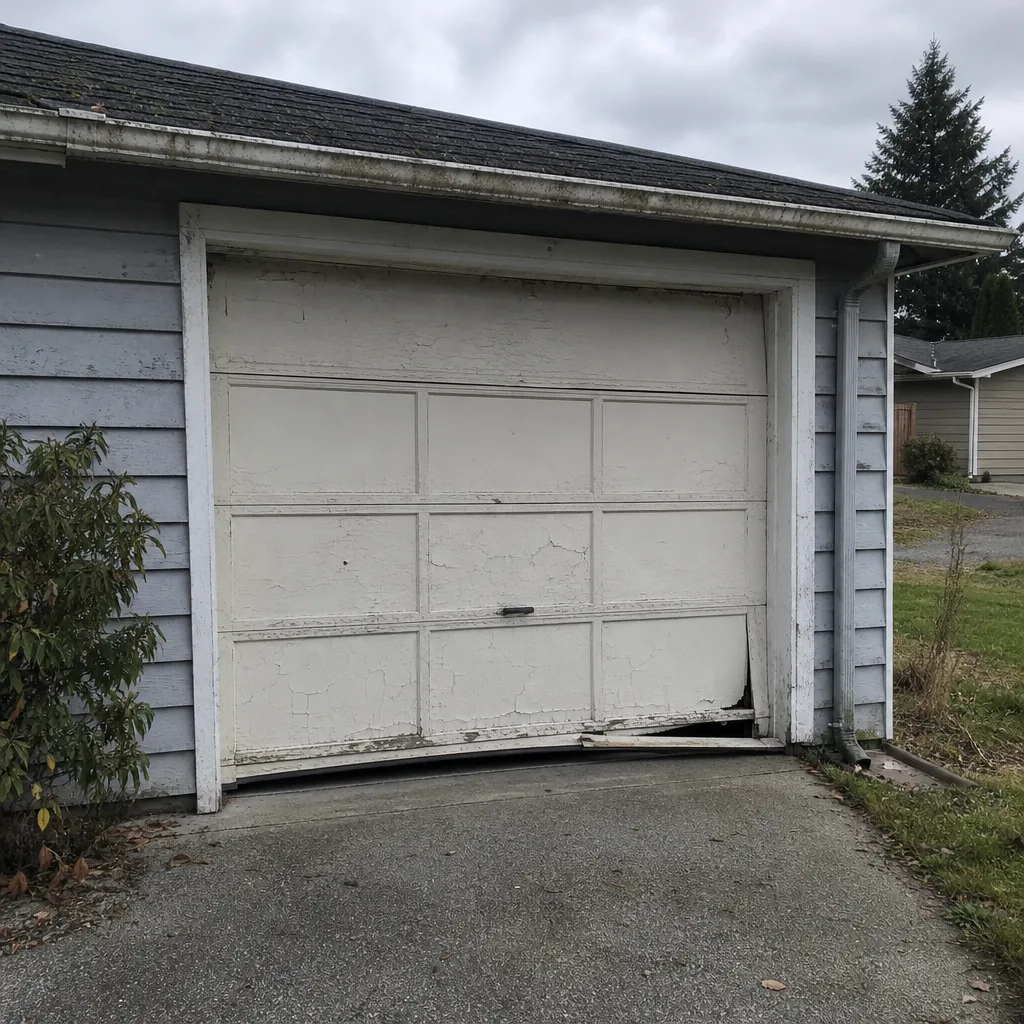 Before
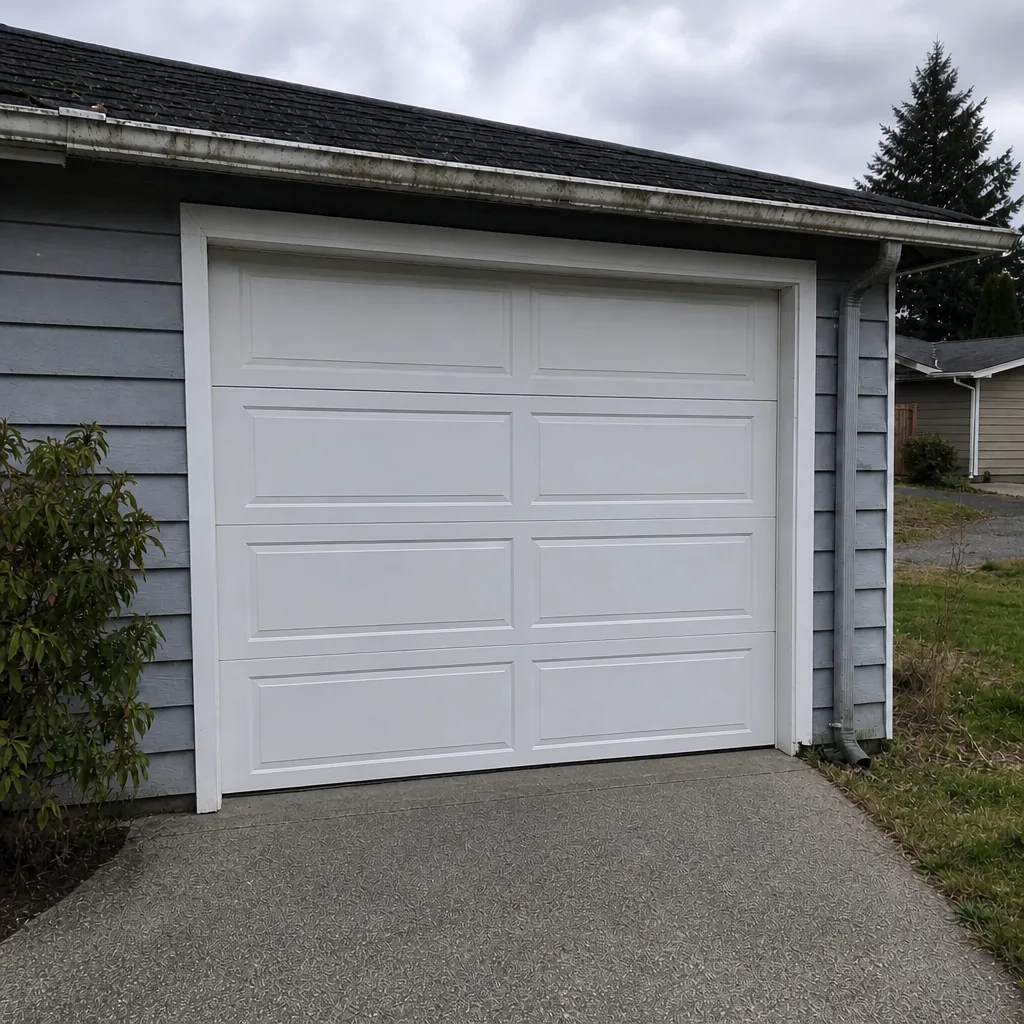 After
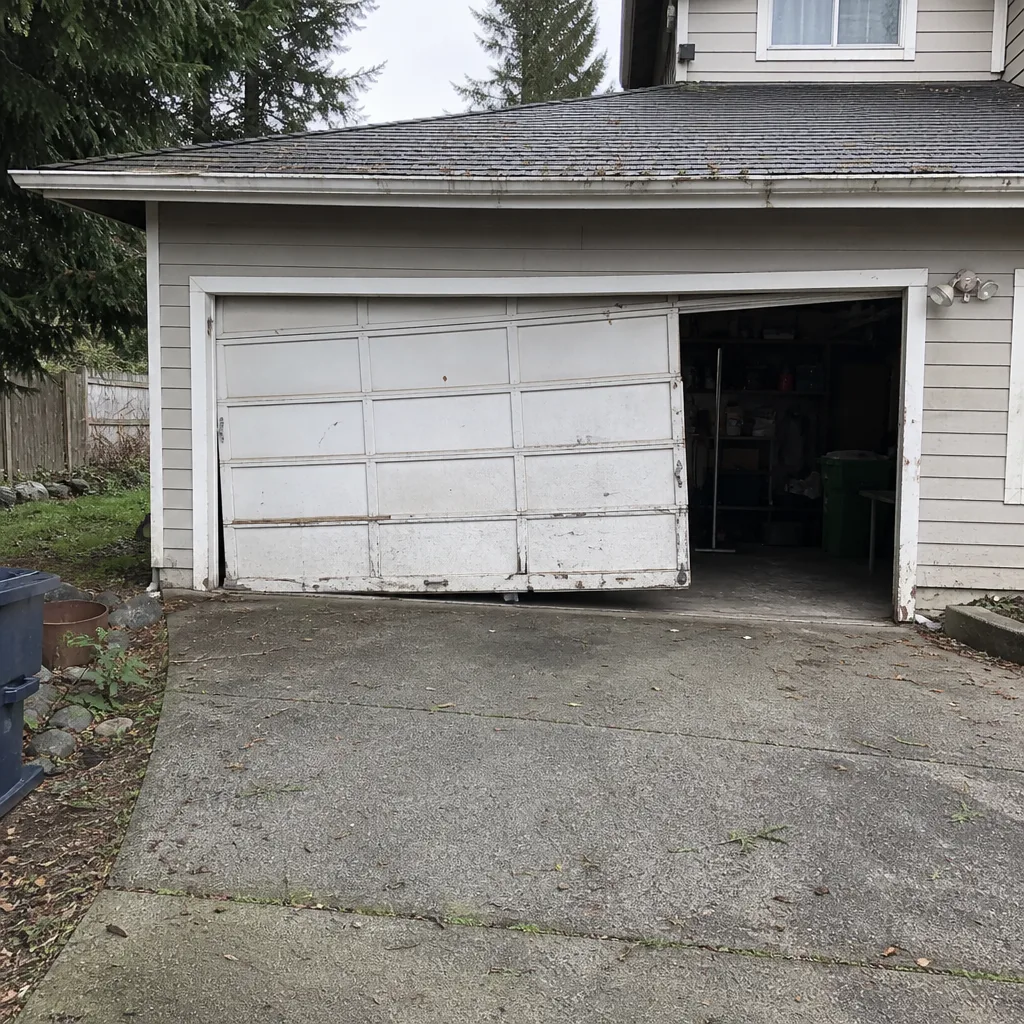 Before
 After
 Before
 After
Frequently Asked Questions
Twice a year at the transition points – once in October before the wet season starts, and once in April after it ends – plus a quick mid-winter look at the seals and rollers. SeaTac’s wet-season/dry-season split means those two transition checks do more for your door than four evenly spaced tune-ups would.
Because the end of the wet season is when six months of accumulated wear shows up. Springs cycle and wear all winter under moisture and temperature swings, and the April load change is when that built-up fatigue becomes a snap. It’s not the season itself – it’s what the wet months did to get there. If your spring is cracked or your door feels heavy, call (866) 566-1405 for a free estimate.
The bottom seal, rollers, hinges, cables, and the door’s balance, in that order. Those are the parts moisture attacks first, and the ones most likely to show wear by April. Run the safety reverse test too. Anything that looks cracked, frayed, or seized is worth a professional look.
No. Torsion and extension springs are under extreme tension, and both manufacturers and safety organizations warn against DIY spring work. A mistake can cause serious injury. Spring replacement needs the right tools and training, and it’s the one seasonal task we’d never suggest a homeowner take on. Call us instead.
Usually temperature. Warm weather changes the door’s balance, and an opener whose force settings were tuned in the colder months can read the difference as an obstruction and reverse. It’s a calibration issue more often than a failed opener. Get it checked before it turns into an intermittent problem – call (866) 566-1405 for a free estimate.
It’s not about speed, it’s about the sequence. Six months of continuous moisture wears the bottom seal, then the rollers and hinges, then the cable cores, and it does it in a predictable order. October prep stops that sequence before it starts; April inspection catches what got through. Skip either and the parts that fail are the ones you’d have caught.
The Bottom Line
SeaTac’s garage door calendar has two dates that matter: October, when you seal and lubricate before the rain, and April, when you inspect what the wet months did. Everything else fits around those two points. Lubricate and check the bottom seal in October, look at rollers and cables in January, inspect springs and balance in April, and relubricate in summer when the heat dries things out. The homeowner jobs are the ones on this list. The spring, cable, and balance work belongs to a trained professional. Do the seasonal work and your door will handle the wet months the way it should.
When you need a hand – whether it’s a seasonal inspection, a failing seal, or a spring that’s given up – SeaTac Garage Door Repair Pros is here. Call SeaTac Garage Door Repair Pros at (866) 566-1405 for a free estimate. We answer the call, we diagnose before we quote, and we cover every stage of your door’s life, from a stuck opener to a full new installation.
Written by the team at SeaTac Garage Door Repair Pros.