Last updated November 23, 2026
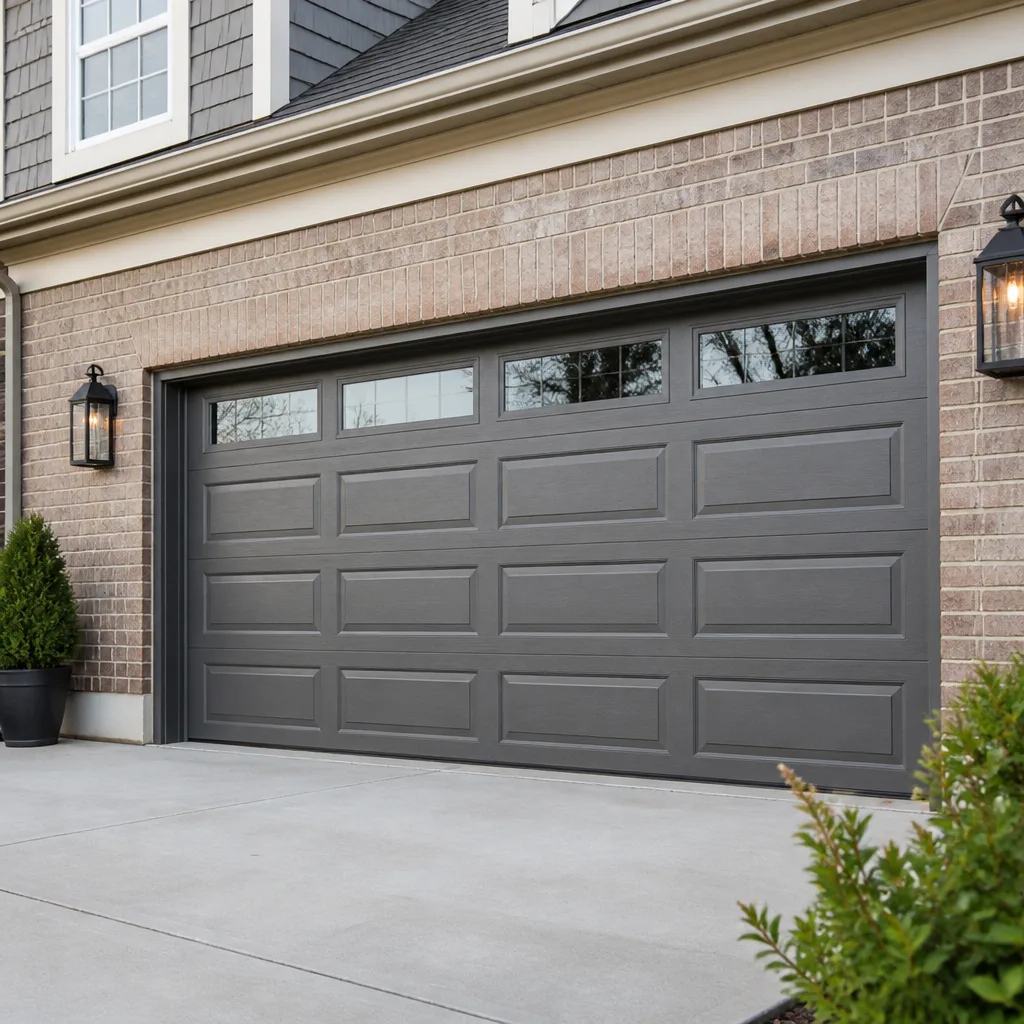 Raised-panel steel
 Carriage house
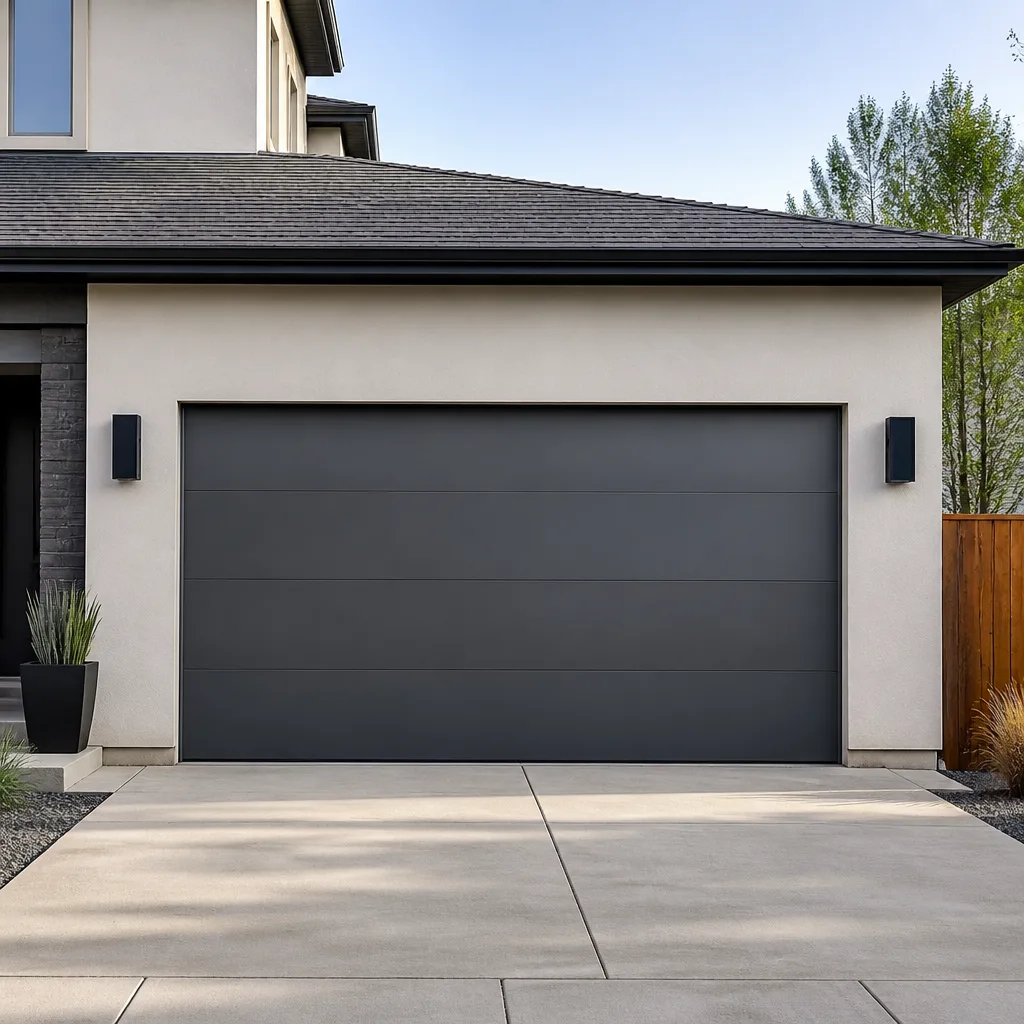 Modern flush
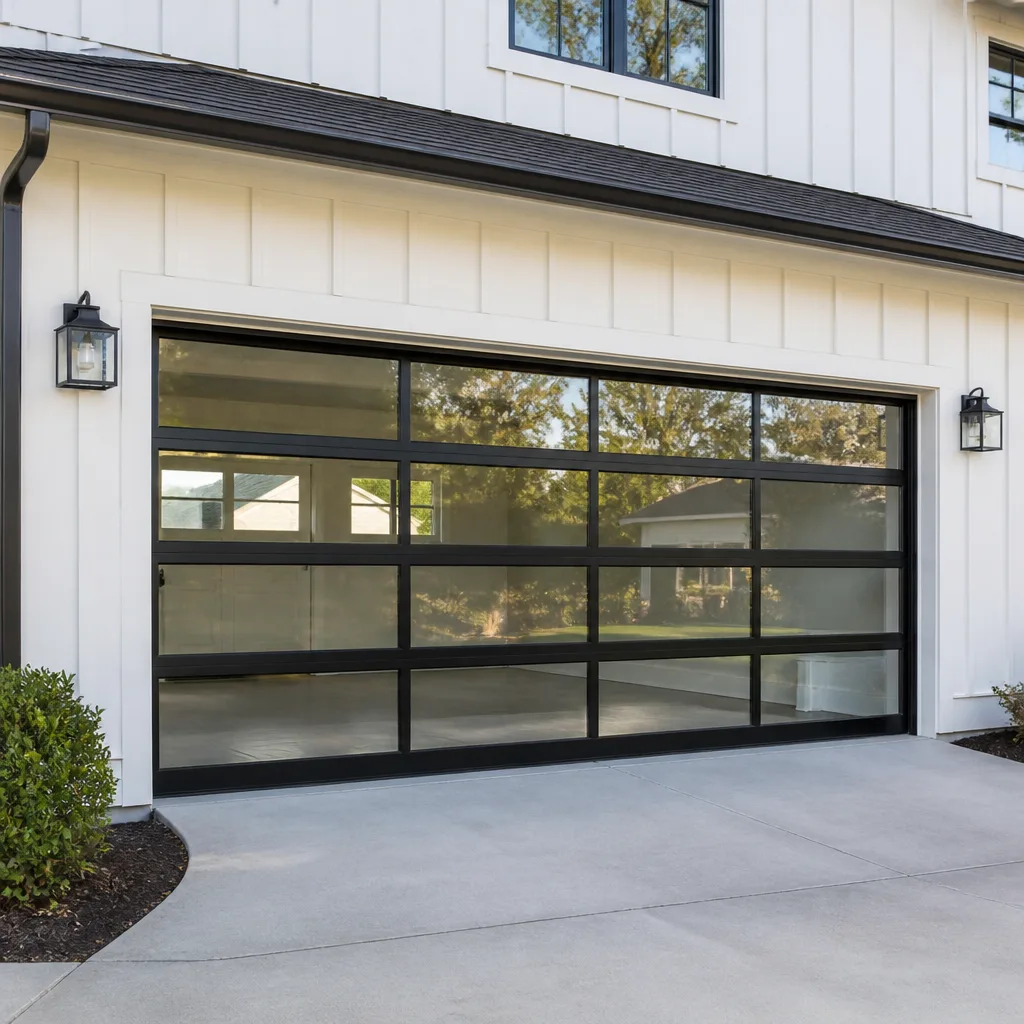 Full-view glass
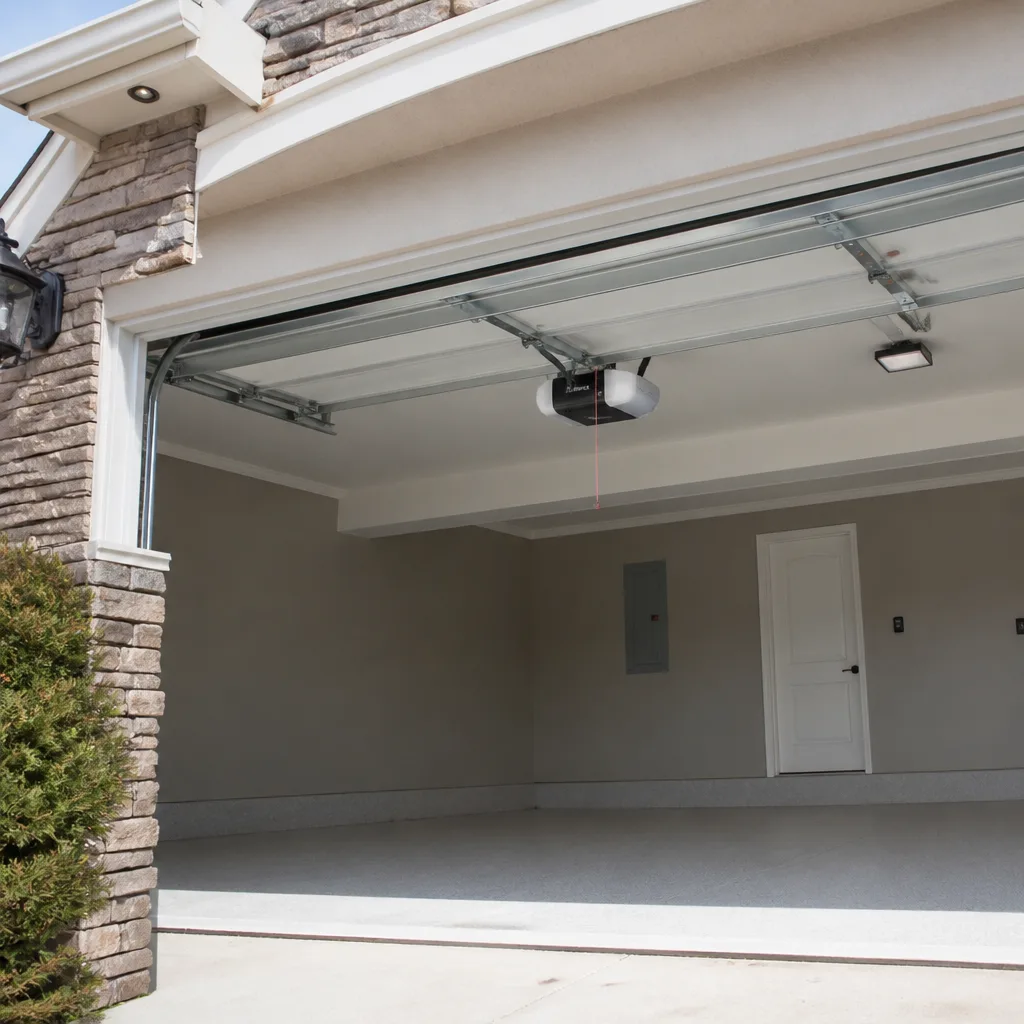 LiftMaster openers
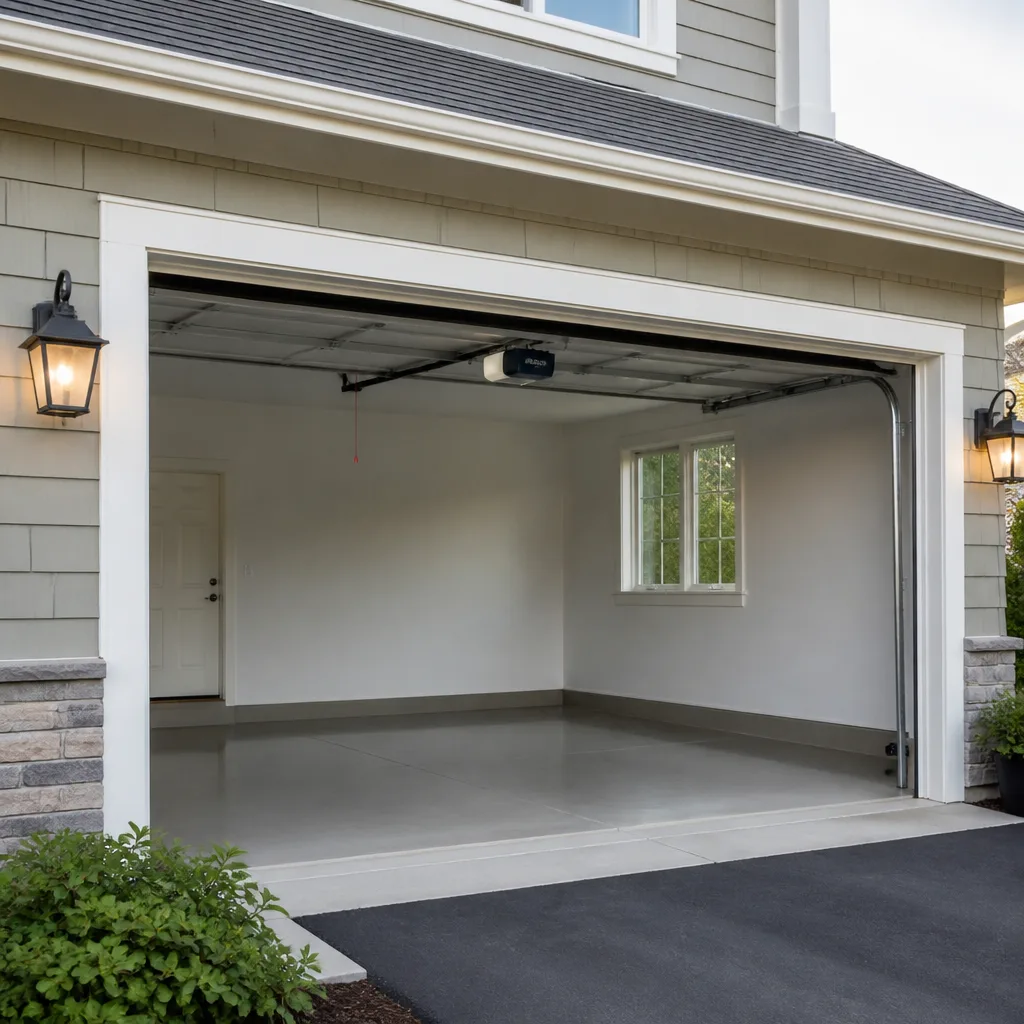 Chamberlain openers
Full 25-point door and opener safety check with every visit - springs, cables, rollers, tracks, and your LiftMaster or Chamberlain opener included
You get a price before we start. It does not change when the pro arrives.
Get your free estimateGarage Door Repair Maintenance Schedule: What to Do and When
Most national garage door checklists say the same thing: lubricate the springs and hinges every six months and you’re fine. In SeaTac, that advice falls apart. From October through March, humidity here often sits above 80%, and a door that gets a spring-to-hinge oiling in April can be dry, sticky, and rusting by the time the rain settles in. The season doesn’t run on a calendar here; it runs on moisture, wind, and temperature swings. This guide gives you the timeline that actually prevents failures in SeaTac, from September prep before the wet months to the post-storm inspection that catches damage early. What you can safely do yourself, what to leave to a professional, and how to build a maintenance log that holds up at resale.
Quick Answer
Your garage door maintenance schedule in SeaTac should run on the seasons, not the calendar: a full tune-up and balance check each September before the rainy season, a cold-snap inspection in January, and a visual check after any wind event over 40 mph. Lubricate monthly with a cold-weather-rated grease from October through March, and have springs and cables professionally inspected once a year, or sooner if you open the door more than four times a day.
Styles & brands we work with
- Raised-panel steel
- Carriage house
- Modern flush
- Full-view glass
- LiftMaster openers
- Chamberlain openers
Table of Contents
- Why Generic Garage Door Schedules Fail in SeaTac
- The SeaTac Seasonal Maintenance Calendar
- The Right Lubricants for Cold, Wet Conditions
- Tension and Balance Testing: How Often, Really
- DIY vs. Professional: What Voids a Warranty
- Building a Maintenance Log That Protects You
- What to Check After a Wind Storm
- Common Mistakes to Avoid
Why Generic Garage Door Schedules Fail in SeaTac
Most maintenance guides published online are written for the Midwest and the Southwest: dry summers, snowy winters, low humidity. When people in SeaTac follow those schedules, they end up under-lubricating in the wet months and over-lubricating in the dry ones, which is the opposite of what the hardware needs.
Here’s what the local climate does to a garage door:
- Sustained humidity from October through March pulls moisture into every pivot point. Steel hinges, rollers, and torsion springs rust faster here than in drier regions, and rust is a slow killer of smooth motion.
- Constant damp followed by warm, dry July and August expands and contracts wood and composite panels. Paint checks, seals pull away from jambs, and doors that fit perfectly in summer can bind slightly in winter.
- Fall and winter wind events stress weather seals and can knock rollers out of alignment. A door that took a gust broadside often runs fine for a week before the damage shows up.
- Temperature drops in the 20s and 30s stiffen cheap lubricants and make cold springs more brittle. That’s the chain of events behind most winter breakdowns.
So the schedule shifts. Instead of a fixed six-month interval, you’re responding to the climate: harder push in September, extra attention through winter, recovery work in spring. The next section lays out the exact months.
The SeaTac Seasonal Maintenance Calendar
Here’s the maintenance calendar we recommend for garage doors in SeaTac, built around the region’s actual stress patterns.
September: Pre-Rainy-Season Prep
This is the most important month on the calendar. Before the wet weather settles in, get the door into shape:
- Lubricate hinges, rollers, and spring coils with a cold-weather grease (more on the right products below).
- Check the weatherstripping along the bottom and edges of the door; a warm, dry September day is the last easy window to replace it before rain.
- Inspect the track for debris and rust, and clean it out with a damp cloth.
- Test the door balance by hand (with the opener disconnected) and listen for any grinding, which usually points to a roller or bearing problem.
- Book a professional tune-up if the door has been noisy or sluggish through summer.
October through November: Early-Wet Check
Confirm the door is still moving smoothly now that the air is damp. Clean the photo-eye lenses if they’ve fogged or accumulated condensation residue. If you’re seeing rust spots on hinges or spring coils, switch to monthly greasing for the rest of winter.
January: Cold-Snap Inspection
January cold snaps put the hardest stress on the door of the year. Springs become brittle, and cold rubber seals can crack. Test the door’s balance, listen for any new sounds, and grease the hinges again. If you hear a snapping or popping sound from the spring area, stop using the door and call a professional: that’s the warning sign before a torsion spring fails.
March through April: Post-Winter Tune-Up
As the weather warms, do a full pass. Springs, cables, rollers, and hinges get a professional inspection. Spring tension often needs minor adjusting after a wet winter. Replace any weatherstripping the cold season cracked.
After any wind event over 40 mph: Storm Inspection
Wild weather in SeaTac often comes with high gusts, which can push the door out of alignment and buckle panels. Check the door’s alignment, look for warped panels, and run it up and down slowly to confirm smooth operation. See our storm check section below.
Need a tune-up before the season turns? Schedule your garage door repair service ahead of the wet months rather than mid-failure.
The Right Lubricants for Cold, Wet Conditions
This is where most SeaTac homeowners get it wrong: the standard advice to “spray silicone on everything” doesn’t hold up in our climate. Silicone sprays are light and dry quickly, which is fine in Arizona. In SeaTac’s damp fall and winter, silicone washes off hinges and spring coils within weeks, leaving bare metal exposed to the exact moisture that rusts it. By February, a door lubricated with silicone spray in October is often running on dry, pitted metal.
What to use instead
- For hinges, rollers, and springs: a white lithium grease or a synthetic grease rated for cold temperatures. These stay put through damp weather and don’t wash off. Grease goes on hinges and pivot points, not the track itself.
- For the track: a spray silicone or PTFE dry lubricant. You want something that won’t attract grit. Grease on the track collects dirt and turns into paste, which is worse than no lube at all.
- For weatherstripping: a silicone spray or a dedicated rubber conditioner. This keeps the seal pliable through cold snaps and prevents cracking.
How often? In SeaTac’s wet months (October through March), grease the hinges and spring coils once a month. In summer, every two to three months is fine. Reapply grease lightly: a thin coat is all the hardware needs, and thick caking collects grit.
If you’re unsure which products suit your door’s hardware, our team works on garage door opener repair and door maintenance every day and can point you to the right choice for your model and brand.
Tension and Balance Testing: How Often, Really
Springs and cables are the parts that most often fail, and the biggest mistake is treating them on a fixed annual schedule rather than an activity-based one. A door that opens twice a day has a totally different wear profile from a door on a high-traffic home with kids coming and going all afternoon.
Here’s the cadence we recommend:
- Light use (2 to 3 cycles a day): Professional spring and cable inspection once a year.
- Moderate use (4 to 8 cycles a day): Professional inspection once a year, plus a balance test every six months that you can do yourself.
- Heavy use (10+ cycles a day, or a property manager’s multi-unit building): Professional inspection twice a year.
Why balance matters more than the schedule itself
A balanced door takes almost no effort for the opener to lift. An out-of-balance door forces springs and the opener to work harder, accelerating wear. Testing balance is quick:
- Disconnect the opener using the manual release handle.
- Lift the door to about waist height by hand.
- Let go. A balanced door stays put or drifts only slightly. A door that falls, rises, or needs real effort is out of balance.
If the door fails the balance test, don’t tinker with the spring tension yourself. That’s a job for a trained professional, and a spring under tension is genuinely dangerous. For context, our technicians have up to 8 years of experience doing exactly this work. Call us for garage door spring repair if your door won’t hold.
DIY vs. Professional: What Voids a Warranty
Some maintenance is straightforward for a homeowner. Some isn’t, and getting the boundary wrong can cost you a warranty claim or put you in the path of a high-tension spring. Here’s the split we recommend.
Safe to do yourself
- Visual inspections of the door, springs, cables, track, and panels.
- Lubricating hinges, rollers, and track (with the right products).
- Cleaning the photo-eye lenses, which often get dusty or foggy and cause phantom safety-trip issues.
- Wiping down the door and weatherstripping.
- Testing the opener’s safety reverse function.
Leave this to a professional
- Adjusting or replacing torsion springs or extension springs. Manufacturers and safety organizations consistently warn against DIY spring work.
- Replacing or adjusting cables, which are under the same tension as springs.
- Realigning tracks after a wind event, especially if the door has warped.
- Anything electrical in the opener unit itself.
- Major adjustments to opener force or travel limits, which need to match the door’s actual travel and weight.
On the warranty question: your manufacturer’s warranty usually covers the hardware, not your DIY labor. If a warranty claim is ever on the line, the manufacturer wants to see that the door was properly maintained and that repairs were done to spec. That’s where the next section comes in. Your garage door itself, whether it’s a Clopay or an Amarr or another brand, is a major investment; keeping the paperwork is how you protect it.
Building a Maintenance Log That Protects You
A maintenance log is the single most underrated thing you can keep for your garage door. It’s a simple document that records every inspection, adjustment, and repair, and it does three useful things: it makes warranty claims easier, it supports your resale disclosure when you sell the house, and it helps the next technician (or you) diagnose a problem faster.
What to record in each entry
- Date of the inspection or repair.
- What was done (lubrication, adjustment, part replacement).
- Who did it (you or a professional).
- Any parts replaced, including brand and part number if available.
- Notes on the door’s condition (noise, balance, rust, weatherstripping).
- Cost, for resale disclosure and record-keeping.
For warranty claims, keep photos of the door at each entry and store copies of any professional invoices. For resale, a log showing regular maintenance is a much stronger selling point than a verbal “we maintained it.” It’s also proof you didn’t void the manufacturer’s coverage by neglecting the hardware. If a door from Wayne Dalton or Craftsman has been failing repeatedly, the log gives the technician the history to find the root cause instead of re-fixing the same symptom.
What to Check After a Wind Storm
SeaTac gets strong wind events in fall and winter, and a door that takes a sudden broadside gust can be structurally stressed even if it looks fine. Inspect the following after any wind event over 40 mph:
- Panel alignment: walk around the outside and check that all panels line up. A warped panel is often visible as a slight bend or gap.
- Track straightness: a buckled or pushed-in track will be obvious if you look closely.
- Weatherstripping: high wind tears rubber seals and pulls them from the door edges.
- Rollers: a roller knocked out of the hinge will scrape and gouge the track.
- Opener response: if the door sounds different going up than it did before the storm, that’s worth a closer look.
If you see a buckled track or a warped panel, don’t force the door to open and close; that can make the damage worse. Call a technician to assess it. Our technicians work on all the major opener and door brands, so we can inspect a damaged door regardless of what you’ve got installed.
Common Mistakes to Avoid
- Following a generic six-month lubrication schedule. In SeaTac’s high-humidity months, six months is too long. Grease hinges and springs monthly from October through March.
- Using silicone spray on hinges and springs. It washes off in wet weather and leaves metal exposed. Use cold-rated grease on hinges and springs, and reserve silicone spray for the track.
- Trying to adjust the springs yourself. High-tension springs are one of the most dangerous DIY jobs a homeowner can take on. Every garage door spring repair should go to a trained professional.
- Ignoring the balance test. A door that fails the balance test is already putting extra strain on the opener and springs. Catching it early prevents a bigger repair.
- Not replacing weatherstripping in September. Once the rain sets in, a damaged seal lets moisture into the door and track, and everything rusts faster.
- Skipping the post-storm inspection. Wind damage doesn’t always show up immediately. A quick visual check after a gust over 40 mph prevents a knock-on failure later.
- Throwing out invoices. No maintenance log means no easy warranty claim and no documentation for resale. Keep records of every adjustment and repair.
Need help avoiding these before the season turns? We offer SeaTac Garage Door Repair Pros seasonal tune-ups and free estimates, so you can schedule the work around the calendar without surprises.
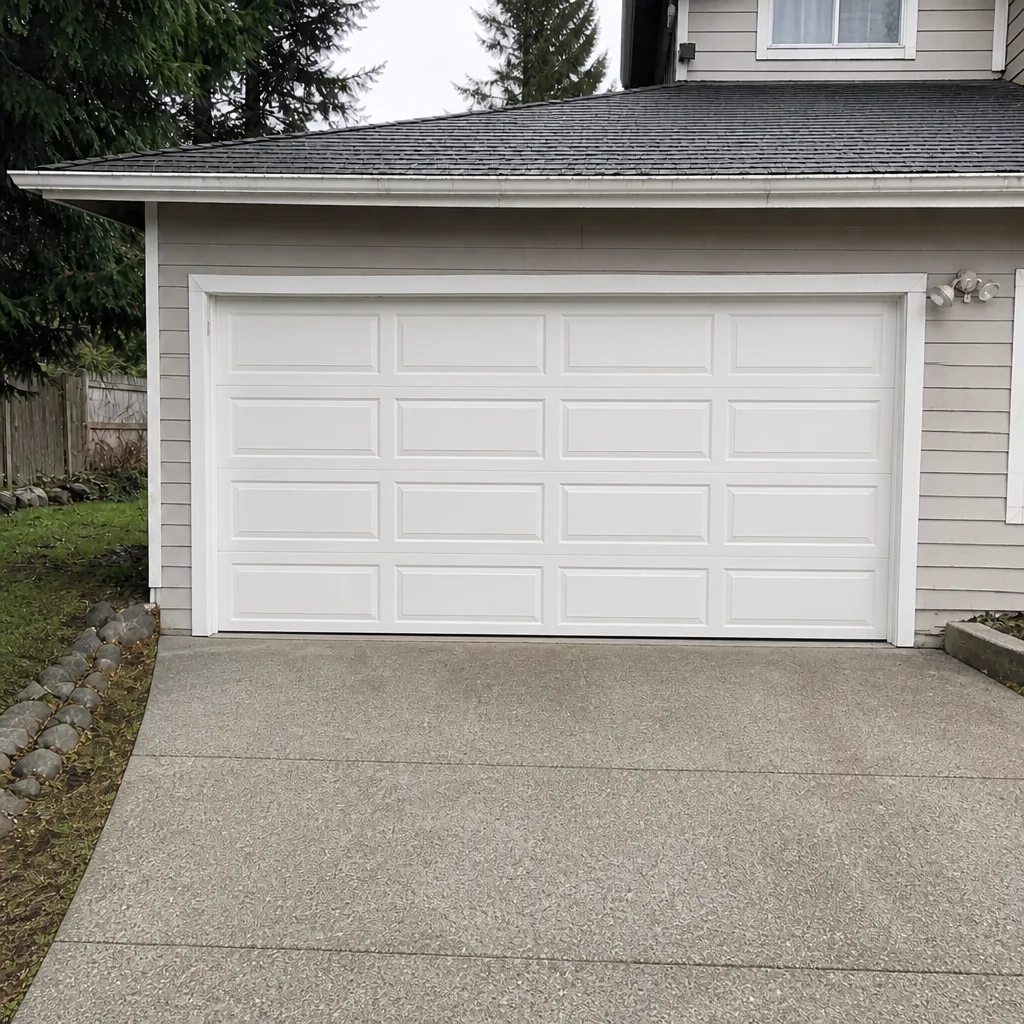
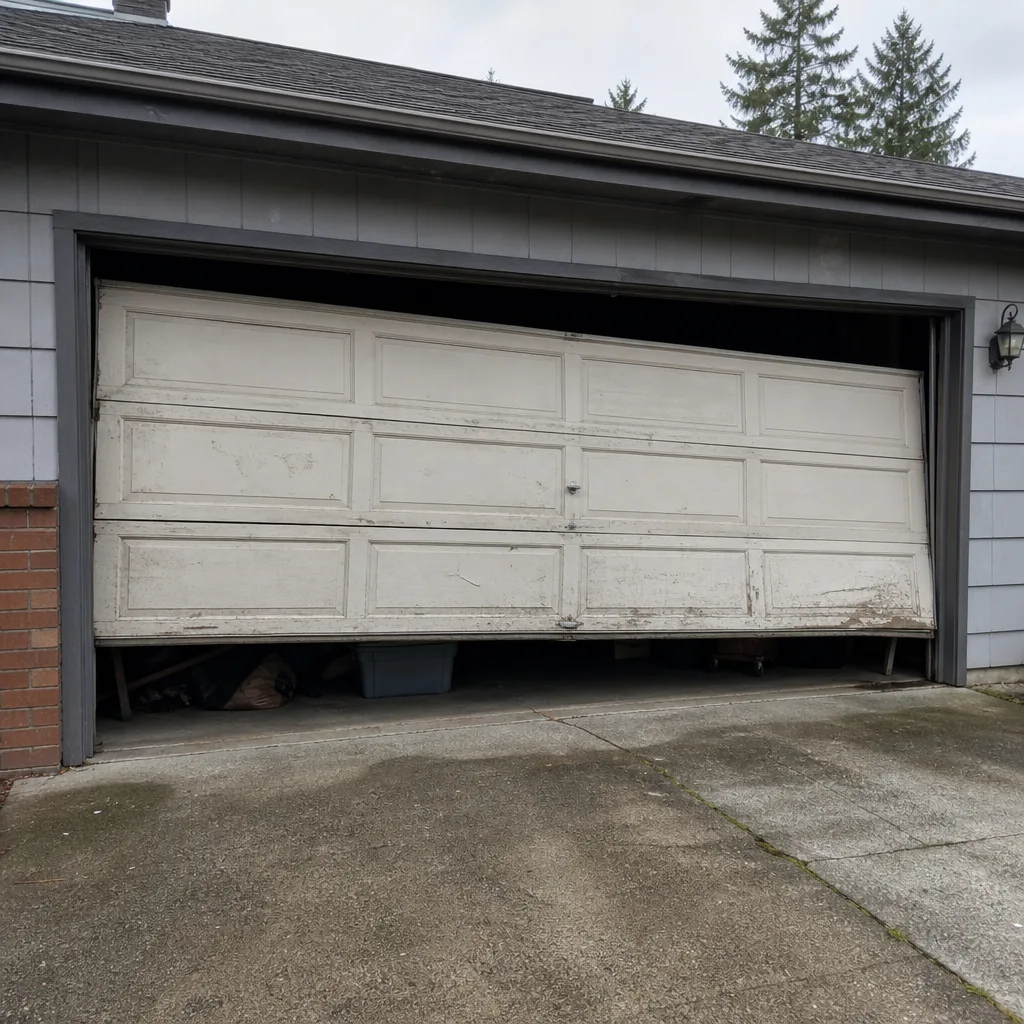
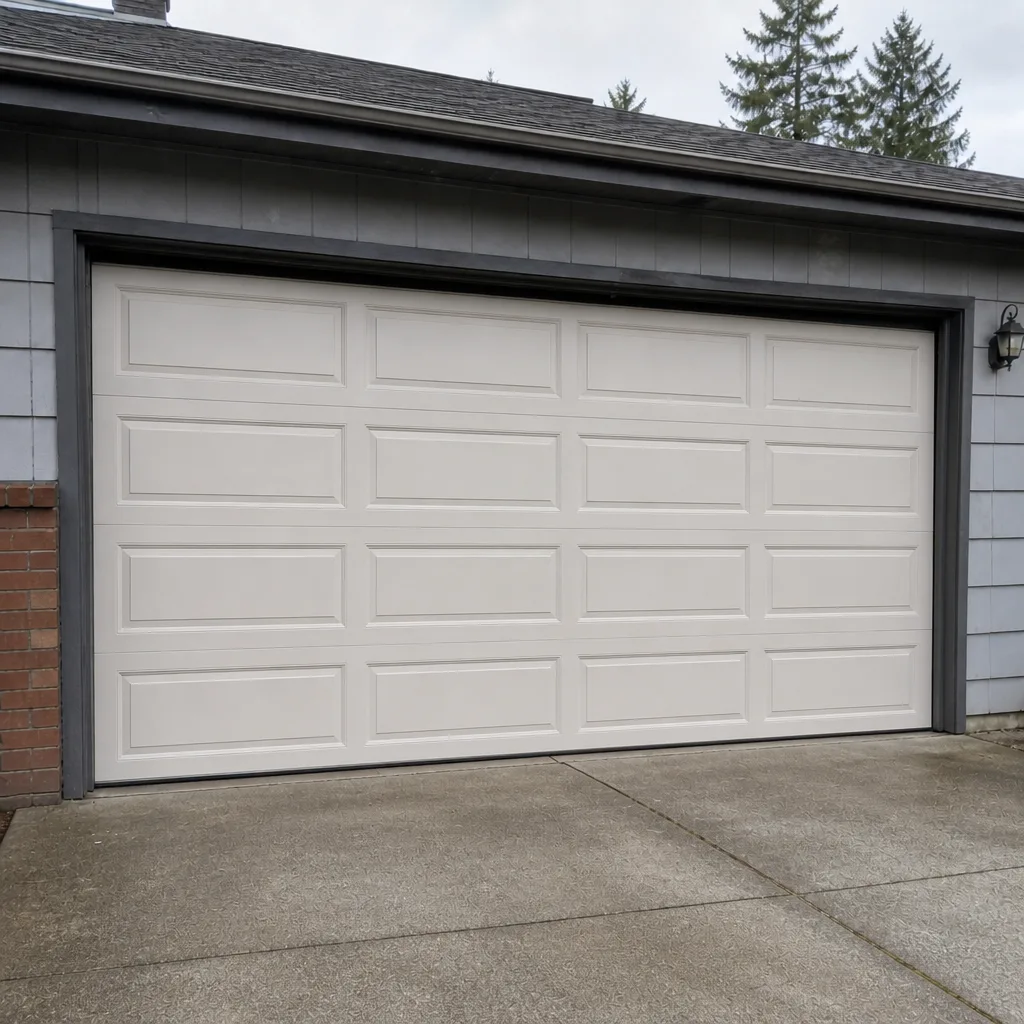
See the difference
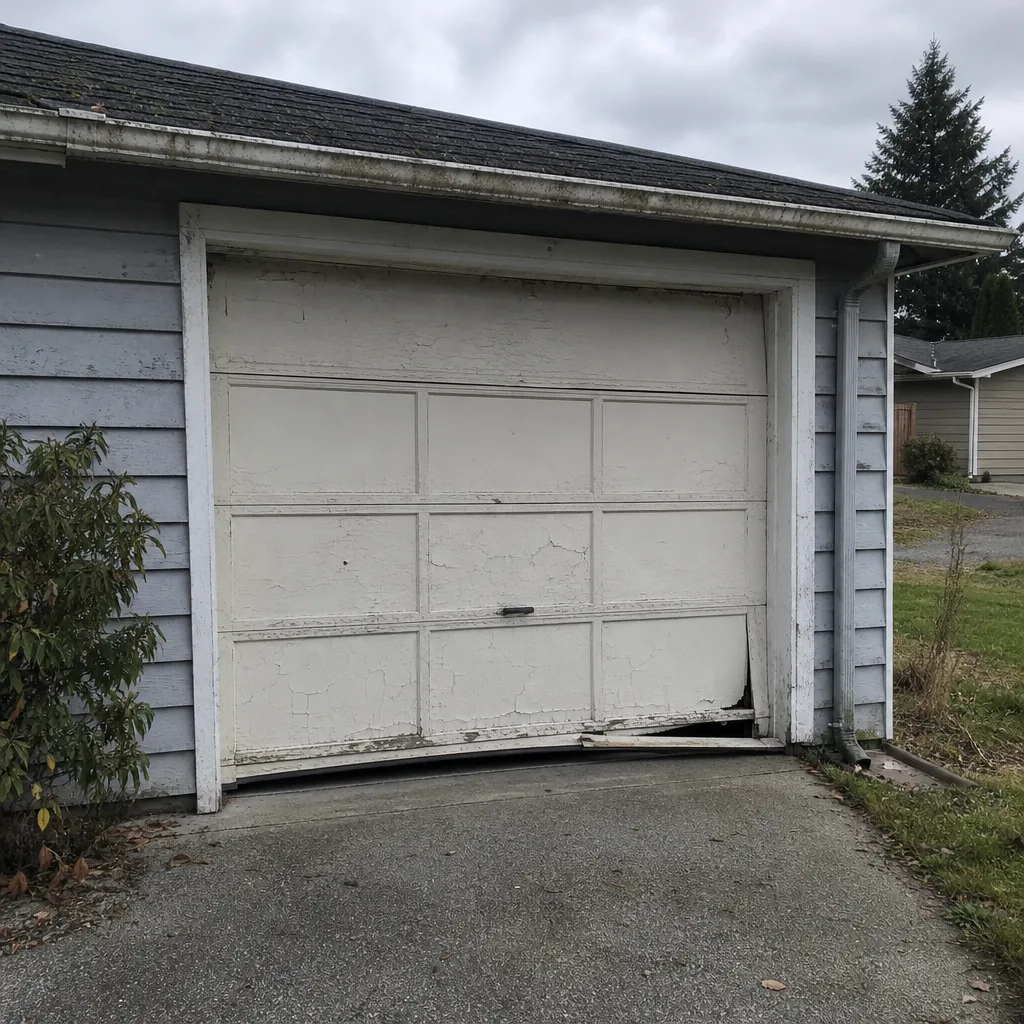 Before
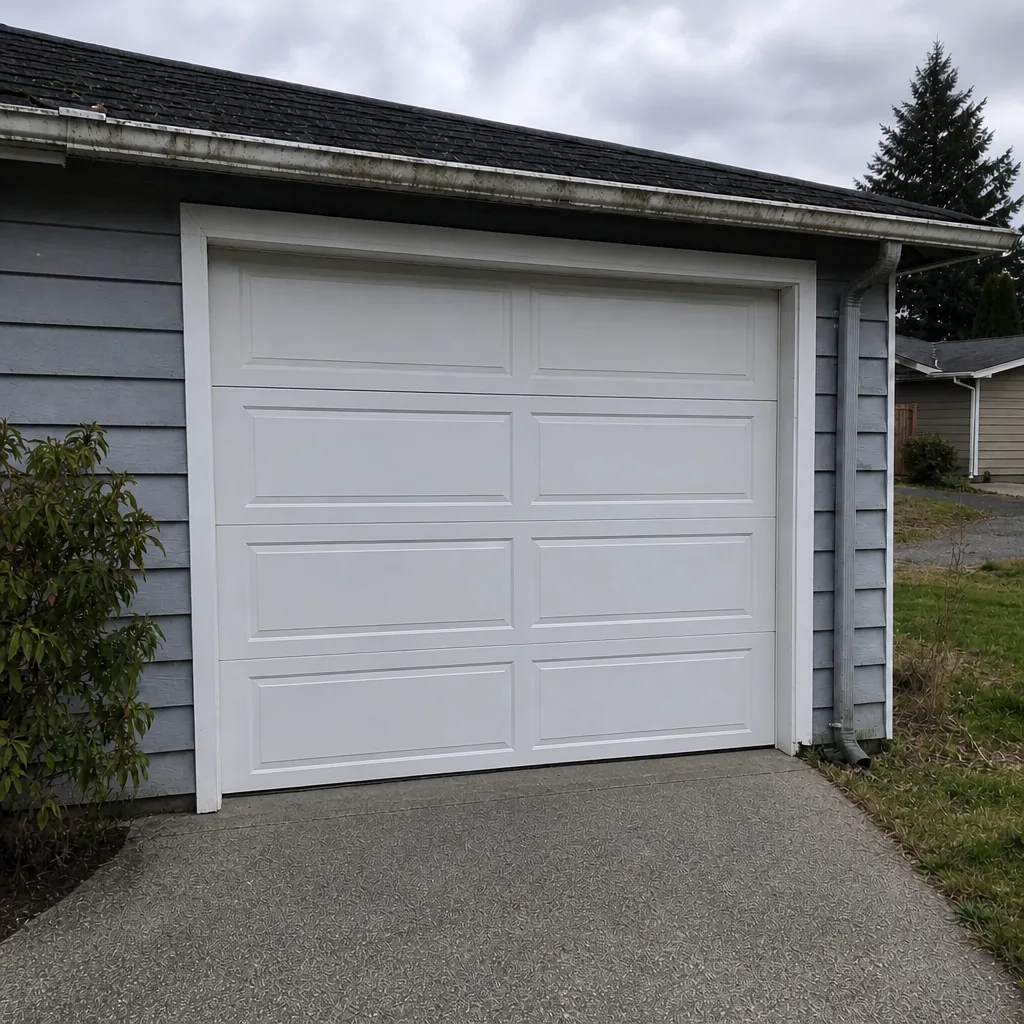 After
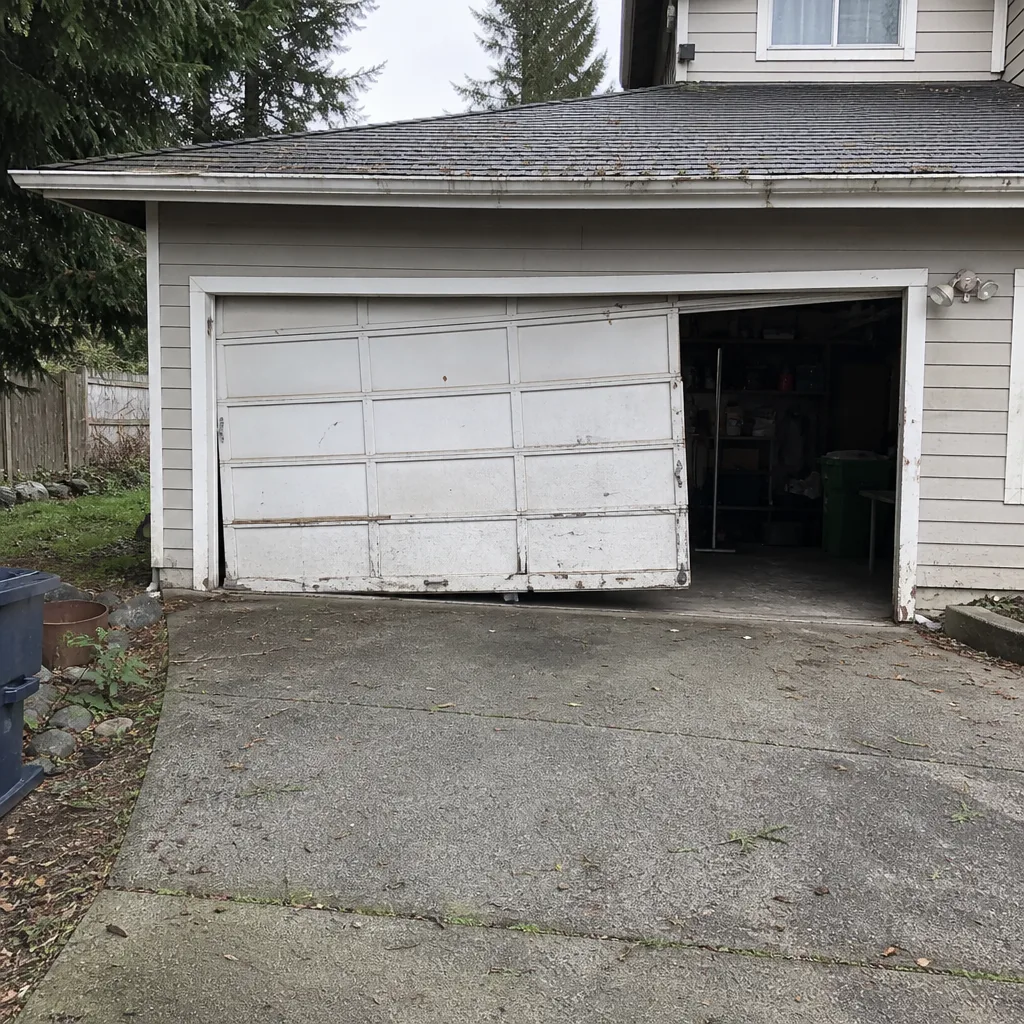 Before
 After
 Before
 After
When to Call a Professional
Call a professional if you hear snapping or popping from the spring area, if the door fails the balance test, if you see a buckled track or a warped panel after a storm, or if the opener surges, stalls, or refuses to complete a full cycle. Those are the signs that the problem is beyond what a homeowner should adjust. For spring and cable work, there’s no safe DIY option at all: those parts are under dangerous tension.
The same goes for an emergency. When a door won’t open and the home is exposed, or a spring fails and the door can’t be secured, SeaTac Garage Door Repair Pros offers emergency garage door service. We diagnose before we quote, so you know exactly what’s wrong and what it costs before anything gets touched. SeaTac Garage Door Repair Pros offers free estimates in SeaTac – call (866) 566-1405 for a tune-up, a repair, or an emergency assessment.
Frequently Asked Questions
Monthly from October through March, and every two to three months in the drier summer season. The high humidity of the Pacific Northwest’s wet months means hinges and springs need more frequent greasing here than a national maintenance guide usually recommends. Use a cold-rated grease, not a silicone spray, which washes off in wet weather. If you’re unsure, call (866) 566-1405 and we’ll walk you through the right product for your door.
A seasonal tune-up typically runs in the low hundreds, with spring or part replacements quoted separately based on what the door actually needs. Every job is quoted and agreed before any work starts, so the written estimate is the price. Call (866) 566-1405 for a free estimate – we’ll give you a clear breakdown before anything gets touched.
You can safely handle visual inspections, lubrication, and photo-eye cleaning. Adjusting or replacing springs and cables is a different story: those parts are under high tension and should only be touched by a trained technician. If your door fails the balance test or makes snapping sounds from the spring area, that’s a call-a-pro situation. Call (866) 566-1405 if you’re not sure which side of the line your task falls on.
Yes. Cold snaps make springs more brittle and stiffen cheap lubricants, which is why a January cold-snap inspection matters in SeaTac. Test the door’s balance, listen for new sounds, and keep the hinges greased. If the door starts making a popping or snapping noise, stop using it and call a professional. Estimates are free, so call (866) 566-1405.
Walk around the door and check panel alignment, track straightness, weatherstripping, and the rollers. If a gust over 40 mph has pushed the door out of alignment or buckled a panel, don’t force it open and closed. Call (866) 566-1405 and we’ll come out to assess the damage before it gets worse.
No. We quote based on what we find during the diagnosis, and the price is agreed before any work starts. If we find a spring or opener issue during a tune-up, we’ll explain it and let you approve the work first. Call (866) 566-1405 for a free estimate – no pressure, no guesswork.
The Bottom Line
The right garage door maintenance schedule for SeaTac isn’t a generic six-month checklist, it’s a seasonal one built around the Pacific Northwest’s wet, windy, temperature-swinging weather. Prep in September, tighten up in January, recover in April, and inspect after every wind event over 40 mph. Use cold-rated grease on hinges and springs, not silicone spray. Leave spring and cable work to a professional, and keep a maintenance log so your warranty and resale documentation are covered. Our technicians have up to 8 years of experience with all the major brands, and SeaTac Garage Door Repair Pros can tune up, repair, or replace your door before the next season turns.
Call (866) 566-1405 for a free estimate and to get your garage door on a schedule that fits the weather it actually faces.
Written by the team at SeaTac Garage Door Repair Pros.