Last updated November 23, 2026
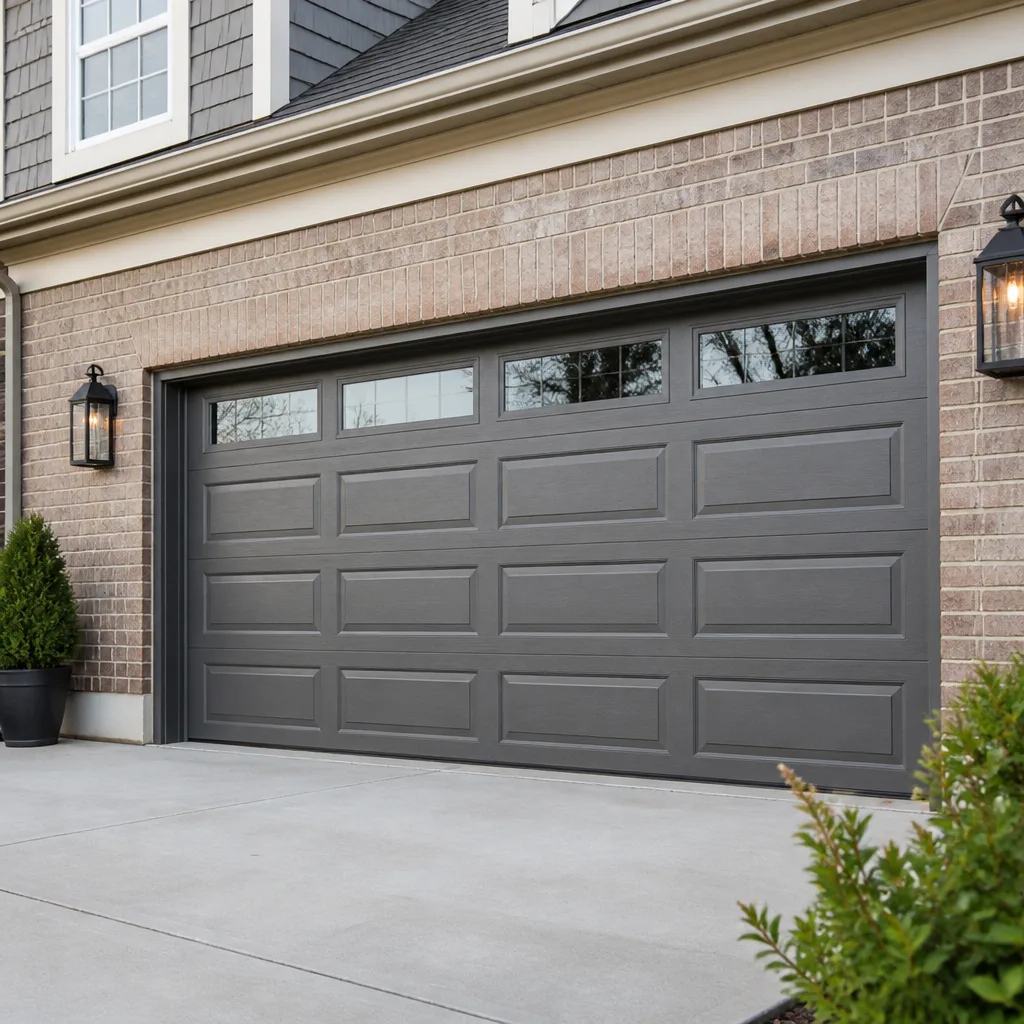 Raised-panel steel
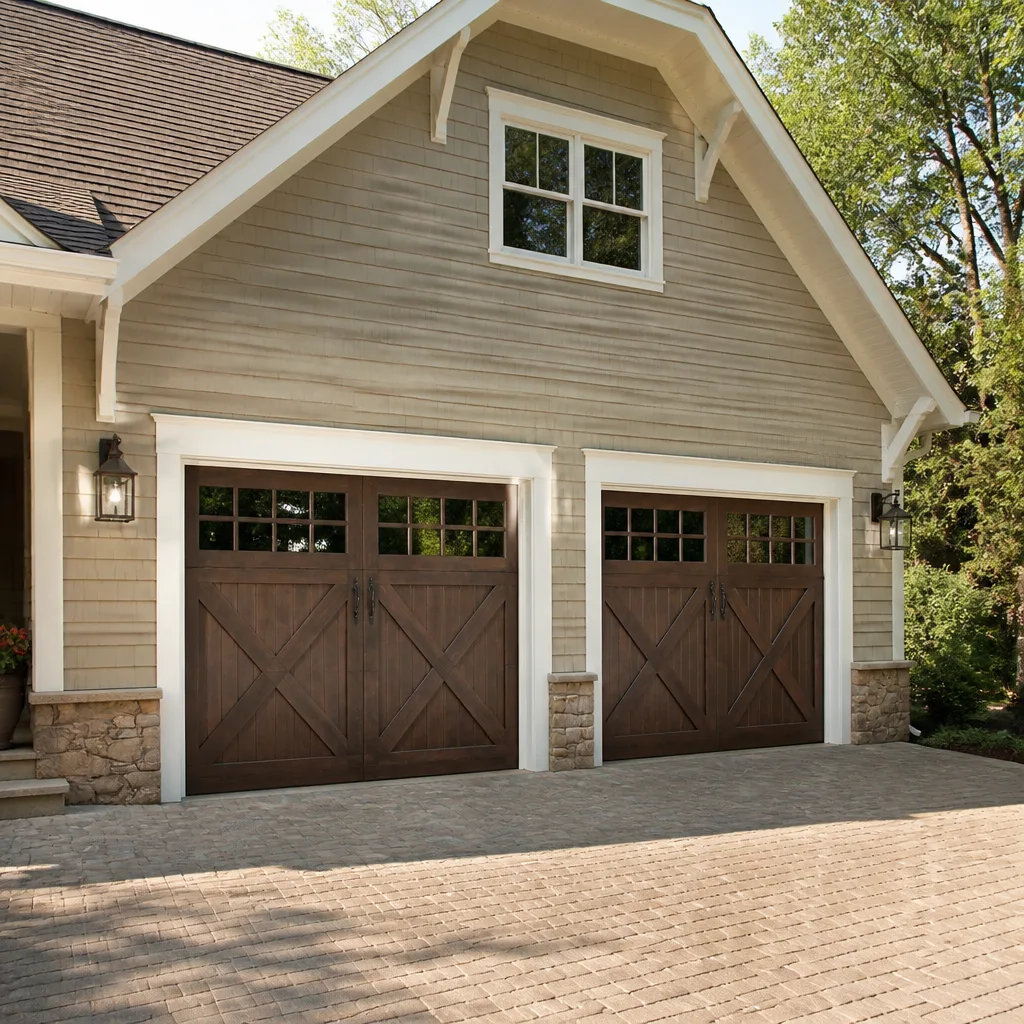 Carriage house
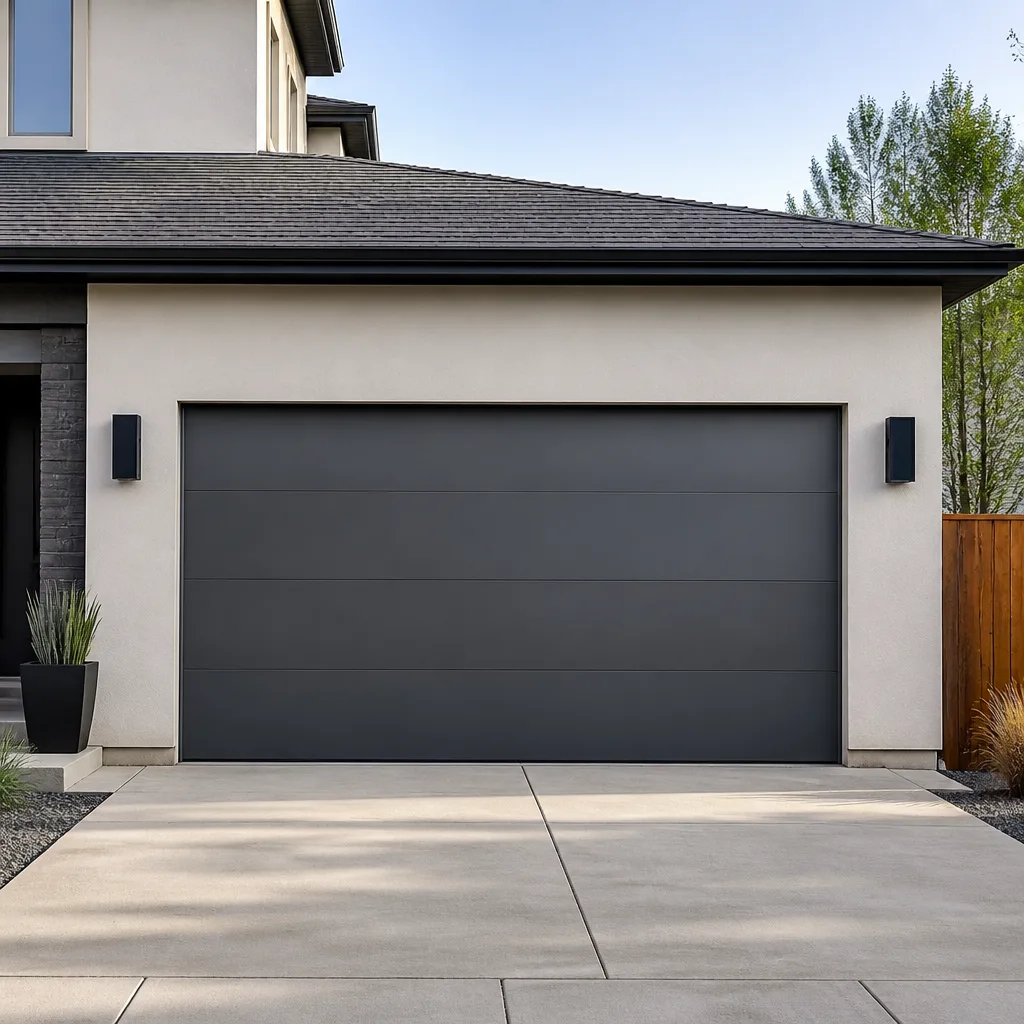 Modern flush
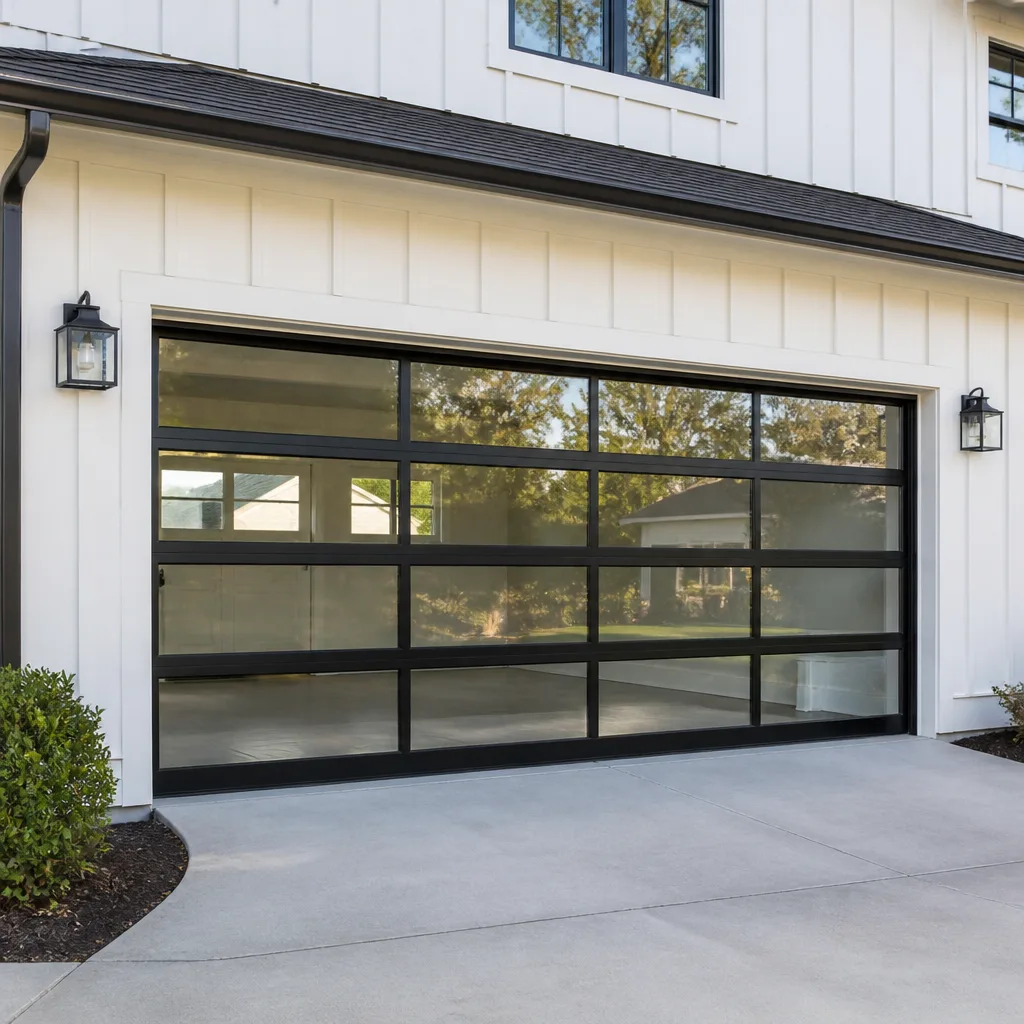 Full-view glass
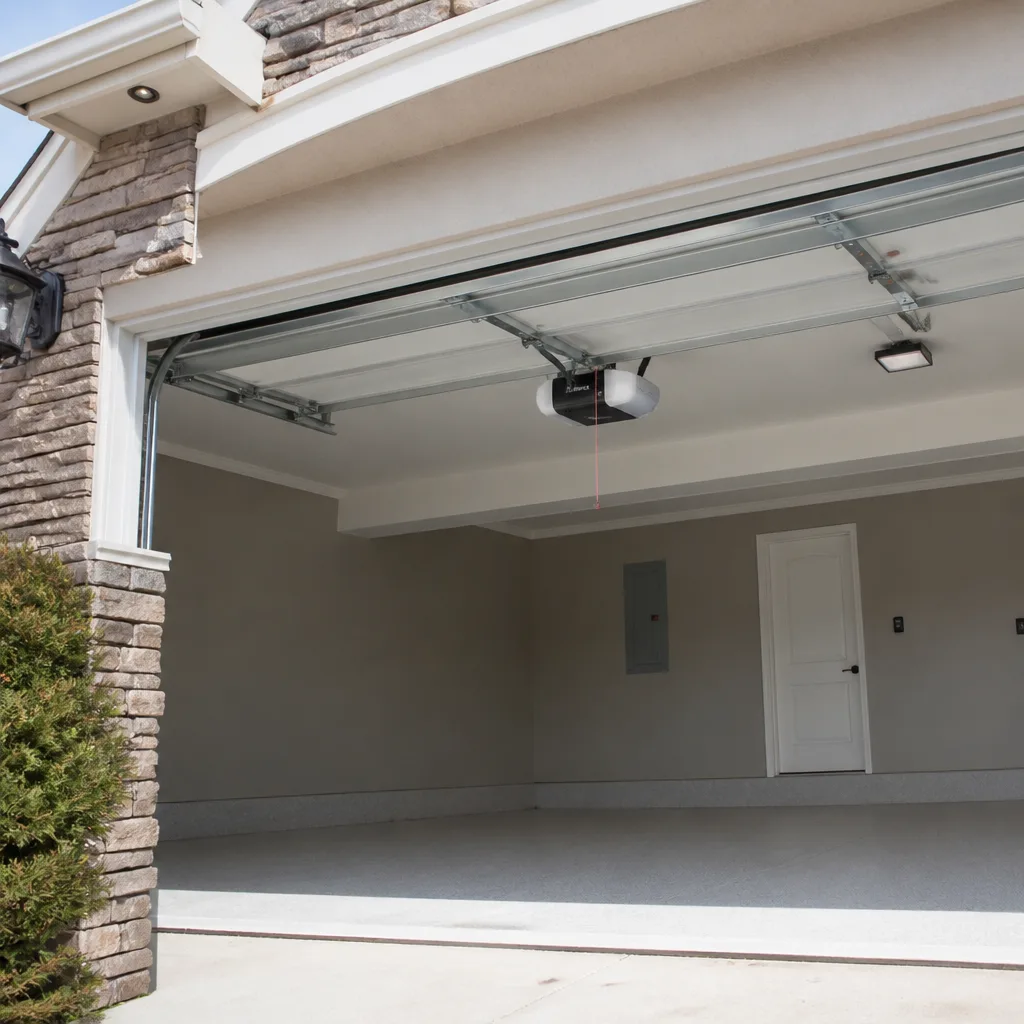 LiftMaster openers
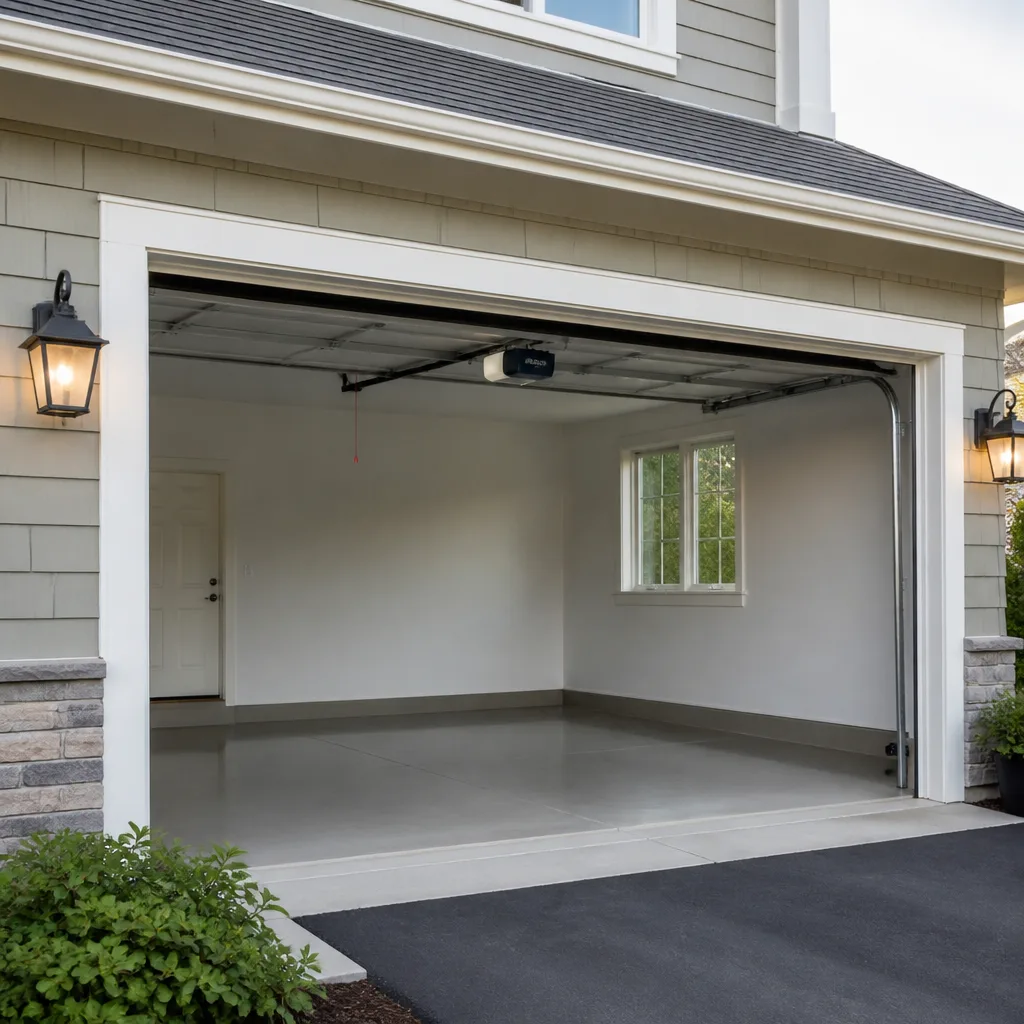 Chamberlain openers
Full 25-point door and opener safety check with every visit - springs, cables, rollers, tracks, and your LiftMaster or Chamberlain opener included
You get a price before we start. It does not change when the pro arrives.
Get your free estimateHow to Hire a Garage Door Contractor in SeaTac: A Step-by-Step Guide
Any handyman with a truck can say they “do garage doors.” The question that separates a multi-brand specialist from someone who learned the trade from a video: “What’s your diagnostic process when the opener runs but the door doesn’t move?” If they hesitate, hang up. Garage doors are the largest moving object in most homes, and the springs and cables under tension can injure someone badly when handled wrong. This guide gives you the exact interview framework we use to think about the work, so you can expose an undertrained generalist before they touch your door. You’ll learn the three questions most homeowners never ask, how to read a quote line by line, and what Washington State actually requires of anyone doing garage door work in SeaTac.
Quick Answer
Hiring a garage door contractor in SeaTac means confirming three things before anyone shows up: that the contractor is registered and bonded with the Washington State Department of Labor & Industries (verify the UBI number yourself), that they can name the brands and spring specifications they work with, and that they put the price in writing before any work starts. Skip any of those three and you’re gambling with the heaviest, highest-tension equipment in your home. Ask the diagnostic question first, get a written quote second, and never let a verbal estimate turn into a surprise invoice.
Styles & brands we work with
- Raised-panel steel
- Carriage house
- Modern flush
- Full-view glass
- LiftMaster openers
- Chamberlain openers
Table of Contents
- The Three Questions That Expose an Undertrained Contractor
- What Washington State Requires of Garage Door Contractors
- Five Red Flags Unique to the Garage Door Trade
- How to Read a Garage Door Quote Line by Line
- Why the Cheapest Bid Fails on Springs and Openers
- What a Real Emergency Call Guarantee Looks Like
- Local Context: What SeaTac Homeowners Should Know
- The Step-by-Step Hiring Process
The Three Questions That Expose an Undertrained Contractor
Most homeowners interview a garage door contractor the way they’d interview a painter: ask for a price, compare it to another price, pick one. That approach works fine for repainting a fence. It fails for garage doors because the failure mode here isn’t a bad paint job. It’s a spring that lets go, a door that comes off its track, or an opener that keeps running after the door has jammed and strips its gears. There are three questions that cut through the sales talk in about ninety seconds.
- “What’s your diagnostic process when the opener runs but the door doesn’t move?” A trained technician will talk you through separating the opener from the door: is the motor turning, is the carriage engaged, is the torsion spring intact, are the cables seated, is the door balanced. Someone who says “probably the opener, we’ll replace it” has told you everything you need to know.
- “What spring specifications will you quote for my door?” Torsion springs are matched to door weight by wire gauge, inside diameter, and length. A contractor who can’t tell you those numbers is guessing, and a guessed spring either fails early or overloads your opener and cables. On a matched pair, the specs need to be stated for both springs, not one.
- “Can you show me the quote broken out by parts and labor?” A single lump-sum number hides labor padding and unnecessary parts charges. A line-item quote doesn’t. This question also flushes out anyone who plans to “see how it goes” once they’re on site.
In our experience, the contractor who answers all three cleanly and without rushing the answer is the one you want. The contractor who gets defensive, changes the subject to price, or claims “we just know” is not. The good news for SeaTac homeowners is that the interview takes about five minutes on the phone, and it applies to any brand: LiftMaster, Chamberlain, Genie, Clopay, Amarr, Wayne Dalton, Craftsman, Raynor. A specialist who works across those brands will answer with brand-specific detail because they’ve seen each one fail in its own way.
What Washington State Requires of Garage Door Contractors
Washington State requires anyone performing construction work for compensation, including garage door installation and repair, to be a registered contractor with the Department of Labor & Industries. Registration means the contractor has a UBI number, a bond, and liability insurance on file. That’s the floor, not a bonus. It protects you if the work goes wrong or the contractor walks off the job.
Here’s how to verify it, and do this before you book an appointment, not after:
- Ask the contractor for their UBI number and their L&I registration number.
- Look them up on the L&I contractor verification page (lni.wa.gov has the search tool). The result should match the business name on the quote.
- Confirm the registration is active, not expired. Expired registration means no bond protection for you.
- Ask for a certificate of insurance showing general liability, and call the insurer if the certificate looks generic.
The tricky part in the garage door trade is the line between “handyman work” and “specialty trade work.” Washington does have an exemption for very small handyman jobs, and some generalists lean on that to justify doing garage door work. But spring replacement under high tension and full door installation don’t fit neatly into the handyman box. If a contractor tells you they’re “not required to be registered for this kind of work,” that’s the moment to end the call. Ask instead for a contractor who is registered and can show it.
SeaTac also has its own permitting layer. Most cities in Washington require a permit for a new garage door installation or a structural change to the opening, and SeaTac is no different in principle. The exact permit triggers and fees vary. Ask the City of SeaTac building department directly, and ask any contractor you hire whether they’ll pull the permit or whether you need to. A contractor who’s vague about permits on an installation is a contractor who has probably skipped them before. For repair work like garage door repair, a permit usually isn’t required, but a structural change to the opening may need one.
Five Red Flags Unique to the Garage Door Trade
Every trade has its own set of warning signs. Garage doors have five that are specific to how this equipment works, and each one points to a different kind of risk.
- Vague brand knowledge. If you ask whether they work on Clopay doors and the answer is “oh, we work on everything,” that’s a red flag. Every major brand has its own quirks: Wayne Dalton uses proprietary torque tubes on some models, Amarr doors often need brand-specific bottom brackets, Clopay panel profiles don’t swap across models. A contractor who can’t speak to those specifics will order the wrong part and delay your repair.
- No same-day parts access. Garage door work is parts-dependent. If the contractor has to special-order every spring and panel, you’re looking at days without a door. Ask what they typically have access to locally and what has to be ordered. That’s an honest question, and a real specialist will answer it plainly.
- Refusal to show spring specifications. A spring quote without wire gauge, inside diameter, and length is a guess. A contractor who can’t tell you what they’re installing on your door is a contractor who may not know. This is the single most important red flag on a spring job, because a mismatched spring is where injury and repeat failure come from.
- Diagnosis by replacement. If the only fix offered is a new opener when the door is the problem, or a new door when the opener is the problem, you’re paying for someone’s inability to troubleshoot. A good technician separates the door from the operator before recommending anything.
- Verbal-only emergency promises. “We can get someone out today, we’ll call you” is not a commitment. An emergency call guarantee you can rely on is in writing: what “emergency” means, what hours it covers, and what the response window actually is. A verbal promise evaporates the moment the contractor is busy.
Property managers in SeaTac should screen harder on the brand question than homeowners do. If you’re responsible for multiple doors across different manufacturers, a contractor who only knows one brand becomes a scheduling problem the first time a Wayne Dalton unit fails and they can’t source the part. We work across LiftMaster, Chamberlain, Genie, Craftsman, Clopay, Amarr, Wayne Dalton, and Raynor because that’s what’s actually installed in the doors we’re called to. A specialist who says “we only do brand X” is telling you they’ll hand you off to someone else when your door isn’t brand X.
How to Read a Garage Door Quote Line by Line
A garage door quote should read like a parts list with labor attached, not a single number on a business card. Here’s what to look for in each line, and what the numbers should look like in the SeaTac market.
| Line item | What it should show | Typical SeaTac range (estimate) |
|---|---|---|
| Torsion spring replacement (one spring) | Wire gauge, inside diameter, length, cycle rating if stated | $180 – $340 per spring |
| Torsion spring pair (matched set) | Both springs specified, plus labor for balancing | Roughly double the single-spring figure |
| Extension spring replacement (one) | Spring length, stretch rating, safety cable included | $140 – $290 per spring |
| Opener repair (LiftMaster, Chamberlain, Genie, Craftsman) | Part being replaced, model of opener, labor | $120 – $350 depending on part |
| New opener installation | Unit model, rail length, safety sensors, disposal of old unit | $320 – $650 installed |
| Panel replacement | Panel count, brand match, color match, hardware reused or replaced | $200 – $550 per section typical |
| Cable replacement (per side) | Cable length, drum condition, whether both cables are replaced | $120 – $280 per side |
| Full door installation | Door model, brand, insulation, opener, haul-away, permit if required | Ask for a measured written quote |
Those are estimates. The written quote on your door is the price, and it should be signed before any work starts. Three things in a quote deserve specific attention:
- Labor padding. If labor is listed as a separate line and it’s more than a modest fraction of the parts cost on a straightforward job, ask why. Spring replacement is a two-spring job in most cases because a matched pair is replaced together. Labor should reflect that.
- Unnecessary parts upsells. A door that needs one panel replaced does not need a new opener unless the opener is actually failing. A quote that recommends both on a single complaint is worth a second opinion.
- Spring spec transparency. If the spring line just says “spring,” ask for the gauge, ID, and length. A quote that won’t specify is a quote that can be substituted with a cheaper spring.
We diagnose before we quote. That means the price you get reflects what’s actually wrong, not a menu of “might as well replace it while we’re here” options. It also means the quote is agreed before any work begins, in writing. On a spring or opener call, the diagnostic step is quick. On a full installation, the measure is what takes time, and the written price follows the measure. Don’t accept a verbal range on an installation; the door has to be measured.
Why the Cheapest Bid Fails on Springs and Openers
The cheapest bid fails on spring and opener work for a specific reason: the cost of doing it wrong lands on you, not on the contractor. Spring replacement is high-tension work with tight tolerances. Opener work is electrical and mechanical at once. In both cases, a bid that undercuts the field by a wide margin is almost always buying cheaper parts, skipping the diagnostic step, or both.
Here’s the liability math in plain terms. Say a quote comes in a couple hundred dollars below everyone else. A cheaper spring is often a lower-cycle spring, which fails in a shorter window. If it fails and takes a cable or a panel with it, the cost of that is not the contractor’s unless they’re still around and accountable. Opener work has a similar shape: a swapped part that masks the actual problem guarantees a repeat call, or a burned-out motor, or a door that operates unevenly and wears its track and rollers faster.
The math also runs through the license and bond. A registered contractor carries a bond and insurance, which is what makes them worth the higher bid. If a bid is dramatically cheaper, part of that savings is the money they’re not spending on registration, bond, and insurance, which pushes the risk back to you.
There’s a middle path. Get three written quotes, but don’t take the lowest number. Take the quote with the clearest spring specs, the most specific parts list, and a contractor who answered the diagnostic question well. In our experience, the best hire on a garage door job is rarely the cheapest bid and rarely the highest. It’s the one with the least ambiguity in the paperwork.
What a Real Emergency Call Guarantee Looks Like
Garage doors fail in ways that create real access and security problems. A door stuck halfway up leaves your home open. A broken spring leaves a door that can’t be operated manually without risk. A snapped cable makes the door dangerous to move at all. Those are the situations where emergency service matters and where a verbal promise is worth nothing.
A real emergency guarantee has these features in writing:
- A definition of emergency. What qualifies for emergency service? A door that will not close, a spring failure, a cable failure, a vehicle trapped inside. The contractor should define this, not you.
- The response window. Not a vague “soon” but a stated window you can hold them to. If they can’t state one, they don’t have an emergency tier.
- What’s not covered. An honest emergency guarantee says what it doesn’t cover. Installation work isn’t emergency work. Neither is a routine tune-up. A contractor who clarifies that is telling you the truth.
- Written confirmation. Not a phone conversation. A text, email, or work order confirming the booking and the window.
We treat emergency garage door service as a core offering, not an upsell. When your door fails and the house is open to the street or the car is stuck inside, the call isn’t about convenience. It’s about a real access and security risk. SeaTac Garage Door Repair Pros confirms emergency bookings in writing. If a contractor won’t put their emergency terms in writing, that’s your answer.
One more point on emergency calls. Even on an emergency job, the price should be quoted and agreed before any work starts. “We’ll sort out the price after we’re done” is the pattern behind most surprise-invoice complaints. A real emergency service quotes before it turns a wrench, even when it’s responding fast.
Local Context: What SeaTac Homeowners Should Know
SeaTac sits between the airport and the surrounding neighborhoods, which shapes how garage door work happens here in a few practical ways. The first is scheduling. If your house or condo is within the flight path corridor, contractors will need to coordinate around noise restrictions and access, particularly if the work involves a truck and a door that has to be removed and replaced. A good contractor asks about access at booking, not when they arrive.
The second is the door mix. SeaTac and the surrounding communities have a wide range of housing ages, and that shows up in the equipment installed. Craftsmans and LiftMaster units are common in older homes. Clopay and Amarr doors show up in more recent builds and renovations. Wayne Dalton doors turn up in specific developments. Odds are good the door on your house is one of those, and a contractor who works only one brand will either substitute or hand you off. Our service covers all eight of the major brands, so brand isn’t the reason a job gets delayed.
The third is moisture. The Pacific Northwest’s wet stretches drive ground moisture and condensation on door panels and hardware, and a garage door in SeaTac sees more of that than a door in eastern Washington. Steel panels with compromised paint finish will rust at the bottom edge first. Wood-look composite doors need the bottom rail and end caps checked more often here than in drier climates. If you’re comparing repair options, ask what moisture-related wear looks like on your specific door material. That’s the kind of question that tells you whether you’re talking to someone with actual local experience.
Fourth, the permits. As noted earlier, most installation work needs a building department conversation in SeaTac, and repair usually doesn’t. When you’re calling around, ask whether the contractor will handle that conversation for you. A contractor who says “no, that’s your job” is telling you they haven’t done the paperwork end much.
Finally, the airport corridor drives rental density. Landlords and property managers around SeaTac manage a lot of units, sometimes across multiple buildings. Emergency calls and multi-unit work move faster when the contractor is set up to work across brands. If the doors across your units are a mix of Craftsman openers, LiftMaster openers, and Clopay or Wayne Dalton doors, you want one contractor who can cover all of it rather than a different specialist for each address. If you’re comparing local options, start with SeaTac Garage Door Repair Pros and work from there.
The Step-by-Step Hiring Process
Here’s the hiring workflow, in order, for any garage door job in SeaTac.
- Define the problem before you call. Write down the symptom: door won’t close, opener run but door stationary, spring snapped, panel cracked, cable off the drum. A clear symptom shortens the diagnostic call and keeps you from being quoted work you don’t need.
- Ask the diagnostic question on the first call. Use the opener-runs-door-doesn’t-move question from the top of this guide. Their explanation tells you more than any review.
- Verify contractor registration. Ask for the UBI number and confirm active L&I registration before you book. This is quick and it eliminates a whole category of problems.
- Get three quotes, all in writing. Ask each contractor for a line-item quote. Compare spring specs, parts lists, and labor breakdowns, not the bottom-line number.
- Ask about emergency terms. Even if your job isn’t urgent, ask how they handle an emergency. If the answer is vague, that tells you what happens when the next door fails.
- Ask who pulls the permit. For installation, confirm before work starts. For repair, confirm that no permit is needed.
- Get the final price in writing before any work starts. The written quote is the price. That’s the last line you check before you agree.
If you’re still in the information-gathering phase and want to understand a specific service before calling, the garage door opener repair page and the garage door spring repair page both lay out what typical jobs involve and what questions to ask on the phone. Spring work in particular is the one place where the DIY instinct is genuinely dangerous, and the page explains why without giving instructions that would put you at risk.
Common Mistakes to Avoid
- Hiring the first contractor who answers the phone. Skipping the diagnostic question means you’re hiring on the basis of availability alone, which is not a qualification. Ask the question before you book.
- Taking a verbal price as the real price. The number on a business card or spoken on the phone is a range, not a commitment. The written quote is the price, and it should be signed before any work starts.
- Letting one brand dictate your choice of contractor. If the only available contractor works one brand and your door is another, you’ll get substitutions or a hand-off. Work with someone who covers the full range.
- Ignoring registration. It takes five minutes to verify L&I registration in Washington, and it eliminates a whole category of risk. Skipping that step is the mistake a lot of homeowners make when they’re in a hurry.
- Treating spring work as DIY. Torsion and extension springs are under high tension, and manufacturers and safety organizations warn against homeowner installation. The injury risk isn’t worth the savings, and a mismatched spring will fail early anyway.
- Not asking about permits on installation. In SeaTac, installation work usually needs a building department conversation. If you skip it, you may be the one dealing with it later.
- Choosing the lowest bid without reading the quote. A low bid hides a cheaper spring, a skipped diagnostic, or an unregistered contractor. Read the quote, not the total.
See the difference
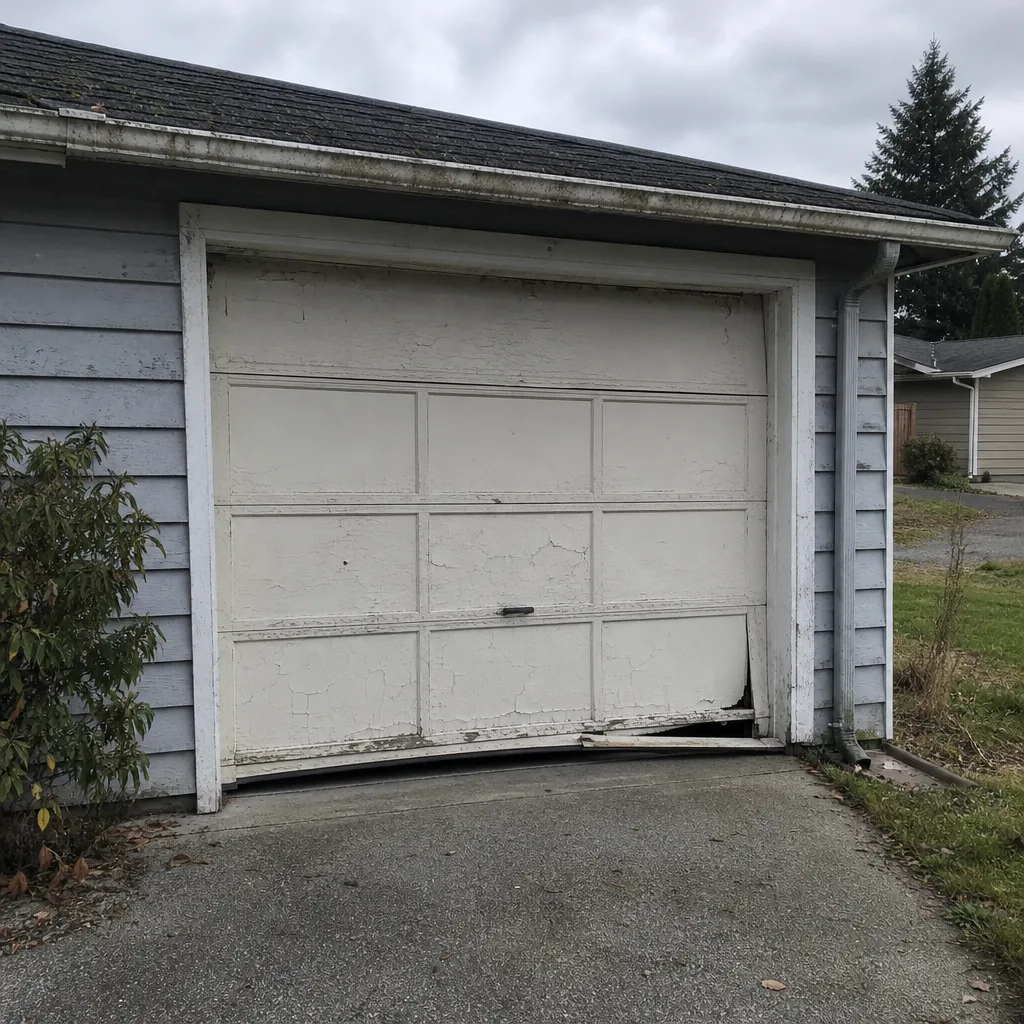 Before
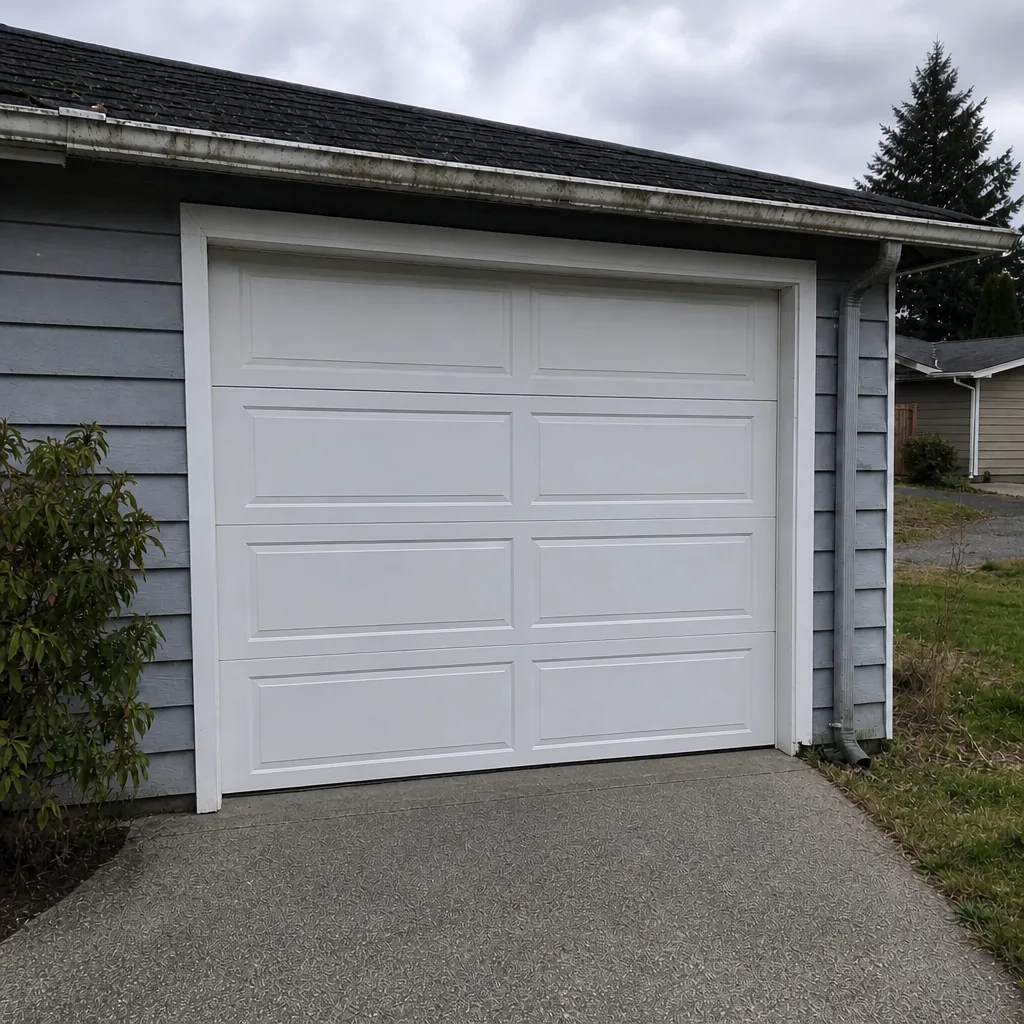 After
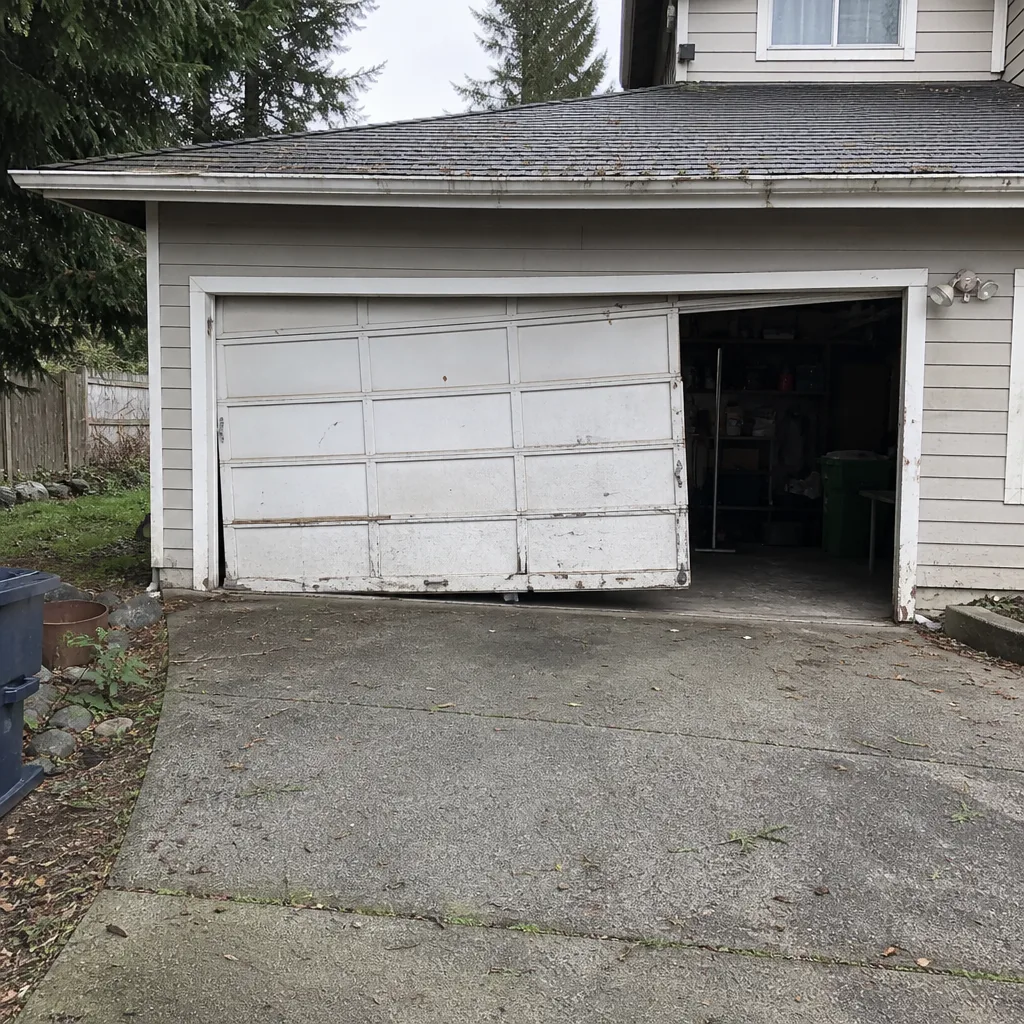 Before
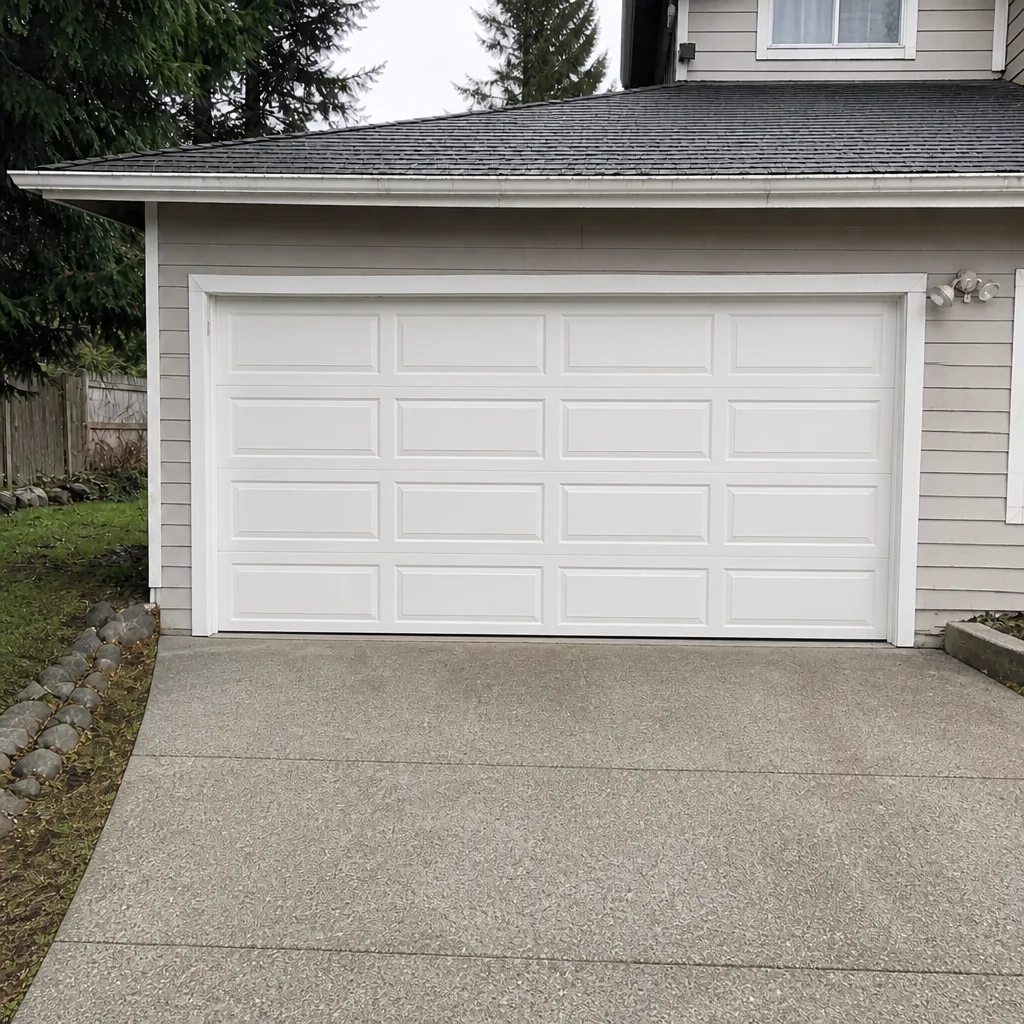 After
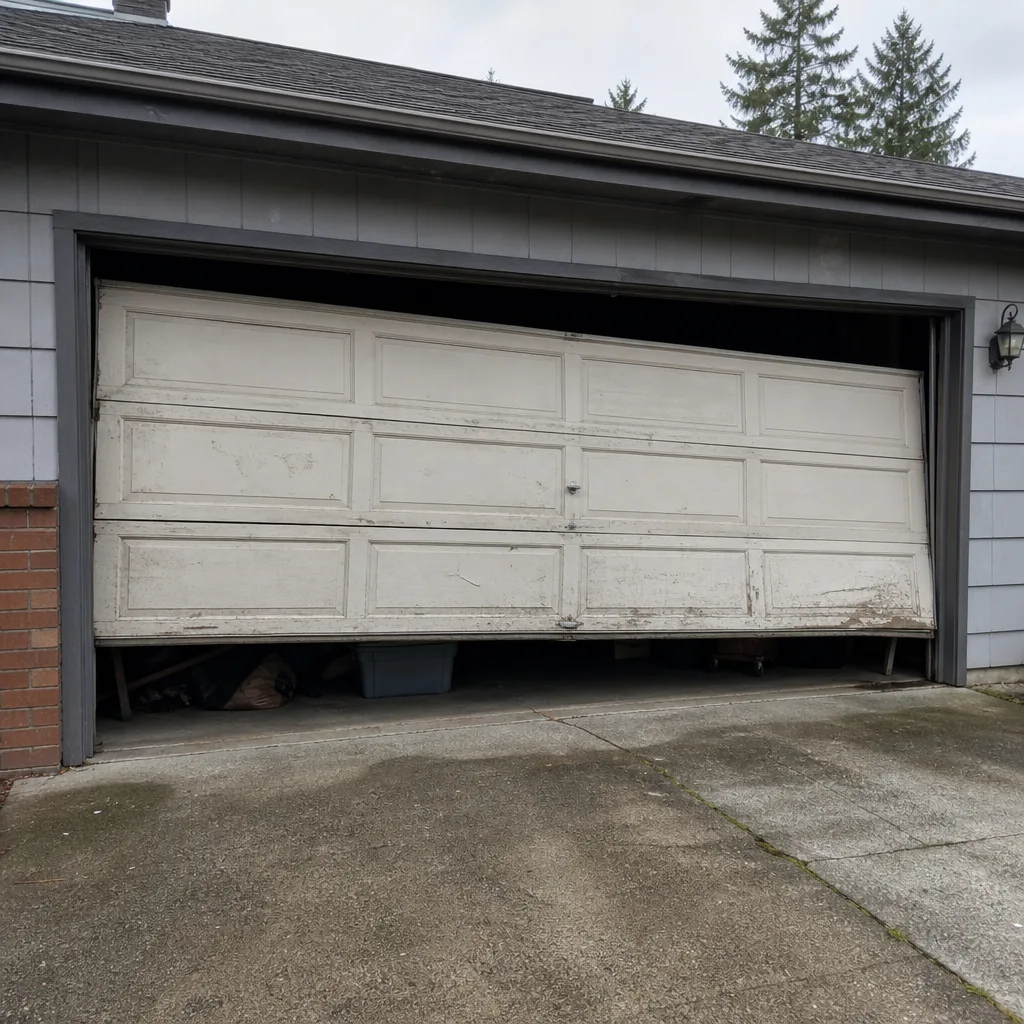 Before
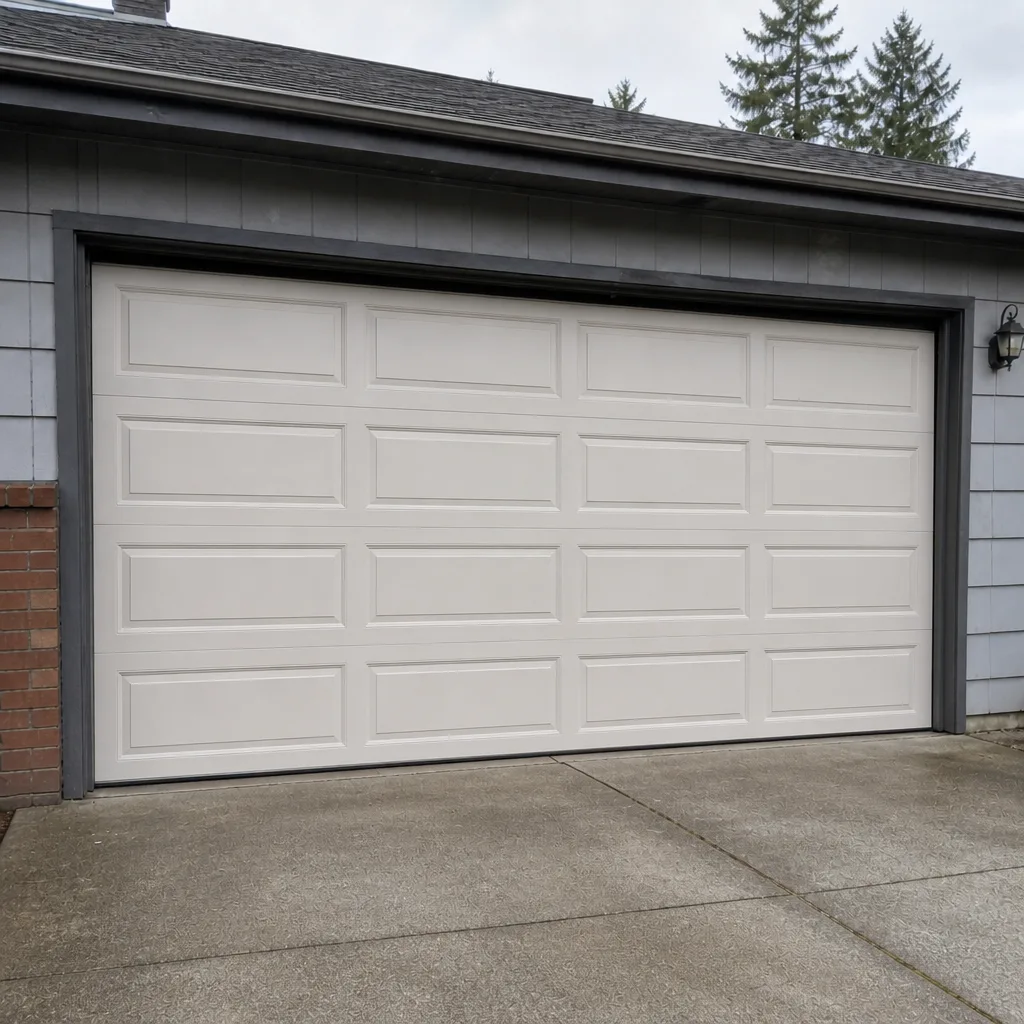 After
When to Call a Professional
Some garage door problems are genuinely worth a call even if you’re handy. A spring that’s snapped or is visibly stretched is the top of the list: don’t touch it, call a pro. A door that’s off its track, a cable that’s come off the drum, an opener that runs but doesn’t lift the door, or a door that reverses on its own are all situations where the risk of getting it wrong is higher than the savings. Panel damage that’s created a gap is a security problem. A door that won’t close at all is both a security and a safety problem. If any of those describe your door, don’t wait for a convenient time. SeaTac Garage Door Repair Pros offers free estimates in SeaTac. Call (866) 566-1405. Our technicians have up to 8 years of experience, and we quote the price in writing before any work starts.
Frequently Asked Questions
Ask for the contractor’s UBI number and their Washington State Department of Labor & Industries registration number, then confirm the registration is active on the L&I contractor verification page. Match the business name on the registration to the name on your quote. If the registration is expired or the names don’t match, don’t hire them. SeaTac Garage Door Repair Pros works with vetted local professionals who are licensed and insured as their state requires. Call (866) 566-1405 for a free estimate.
Typical SeaTac-area estimates run $180 – $340 for one torsion spring and $140 – $290 for one extension spring. A matched pair is usually replaced together, so a pair costs roughly double the single-spring figure. The written quote on your door is the final price, and it’s agreed before any work starts. Call (866) 566-1405 for an exact quote, which is free.
Emergency service is available for doors that won’t close, springs that have failed, and cables that have come off the drum. A door stuck open is a security issue and an access problem, so it qualifies. We confirm the booking and the response window in writing. Call (866) 566-1405 and we’ll book it out.
No. We diagnose before we quote, and the written quote we give you before work starts is the price. If we find something during the job that genuinely changes the scope, we stop and re-quote before proceeding, not after. Call (866) 566-1405 for an exact quote, which is free.
Yes, across the major brands installed in SeaTac homes, including LiftMaster, Chamberlain, Genie, Craftsman, Clopay, Amarr, Wayne Dalton, and Raynor. You don’t need to trace down the original installer or replace a working unit just because the brand is unfamiliar. We look up the model on site. Call (866) 566-1405 for a free estimate.
Leave the door alone, don’t try to force it, and if it’s stuck open, secure the opening another way until the technician arrives. Don’t try to release or manually lift a door with a broken spring or a dislodged cable; the tension in those components can cause serious injury. Call (866) 566-1405 and we’ll talk you through what’s safe to do while we’re on the way.
The Bottom Line
Hiring a garage door contractor in SeaTac comes down to three questions and a written quote. Ask how they diagnose a door that won’t move, ask what spring specifications they’d quote for your door, and ask for a line-item written price. Verify their Washington State L&I registration before you book. Get three written quotes and read each one for spring specs, parts lists, and labor, not the bottom-line number. Treat emergency terms like a contract, not a promise. And remember that spring work is high-tension work, which is the single best reason to hire a specialist instead of a generalist. Our technicians have up to 8 years of experience, and we quote before we start, every time.
If you want to know what a job typically involves before you call, our garage door spring repair and garage door opener repair pages cover both in more detail, and the garage door repair page covers the broader repair scope. Ready to book? Call (866) 566-1405 for a free estimate in SeaTac. We’ll diagnose the door, give you a written price, and agree it before any work starts.
Written by the team at SeaTac Garage Door Repair Pros.